

Table of Contents
What if everything you’ve been told about “staying positive” is actually holding you back?
Here’s the uncomfortable truth nobody shares on those pretty Pinterest boards: toxic positivity is real, and it’s exhausting. You don’t need to smile through your struggles. What you do need is a sustainable system that nurtures genuine optimism—without the burnout. True positive mindset comes from honoring your feelings while choosing thoughts that serve you.
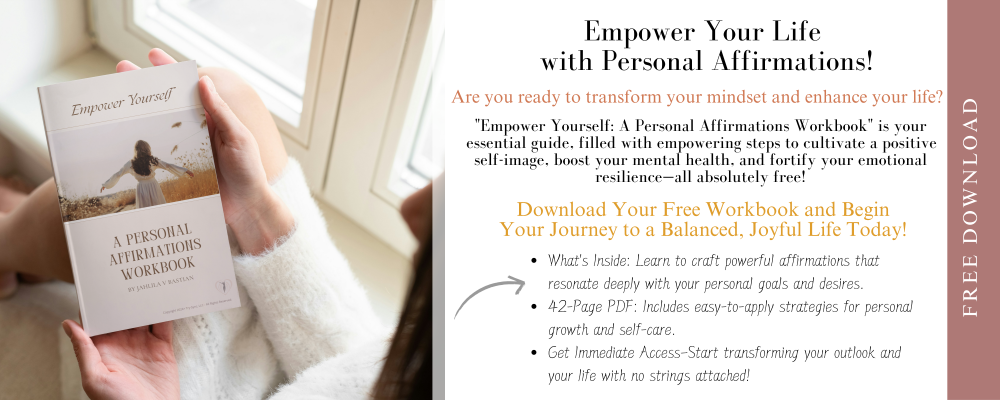
In this guide, you’ll discover 12 research-backed self-care practices that transform how you think, feel, and show up. No toxic positivity required—just real strategies that meet you where you are!
This post may contain affiliate links. I only recommend products and services I genuinely believe in. Additionally, some images on this website may have been created with the help of AI to convey the feeling and aesthetic I wish to share with my readers.
What You Might Need
- Time: 10-30 minutes daily (start with just 5!)
- Budget: $0-$20 (most practices are free)
- Supplies: A journal or notes app, your phone for wallpapers
- Mindset: Willingness to try something new for 7 days
1. Understanding the Connection Between Self-Care and a Positive Mindset
What if I told you that self-care isn’t selfish—it’s the foundation of every positive thought you’ll ever have?
Your mindset doesn’t exist in a vacuum. It’s directly tied to how well you’re caring for your physical, emotional, and mental needs. When you neglect yourself, negative thoughts creep in. But when you prioritize self-care? Your brain responds.
How Self-Care Supports Mental Wellness
Research consistently shows that self-care practices support emotional regulation and stress reduction. When you’re not running on empty, your brain has the bandwidth for positive thoughts.
Action Steps
- Begin with 5 minutes of intentional self-care each morning
- Notice how your body feels before and after
- Journal one positive thought that emerges
- Build gradually to 15-30 minutes daily
2. Start Your Morning with Positive Intentions

The first 10 minutes of your day can determine the next 10 hours.
What you feed your mind before your feet hit the floor sets your day’s trajectory. A survey of over 1,000 Americans found that 90% say their morning routine sets the tone for their mental wellness for the rest of the day.
Why Morning Rituals Matter
Having a morning routine can increase your energy, productivity and positivity by generating momentum, building up to the brain’s peak time for cognitive work in late morning. Starting with intention—rather than immediately checking email—helps you enter the day proactively instead of reactively.
Action Steps
- Choose 3-5 positive quotes that genuinely resonate
- Set one as your phone lock screen
- Speak your favorite affirmation aloud while still in bed
- Pair with 3 deep breaths to anchor the feeling
3. Harness the Power of Positive Affirmations
What if the most important conversation you have each day is the one inside your own head?
Here’s what nobody tells you about affirmations: they feel awkward at first because they’re challenging your default programming. That resistance? It’s proof they’re working.
The Science Behind Affirmations
fMRI studies found a measurable significant increase in brain activity in the ventromedial prefrontal cortex and ventral striatum—regions associated with self-related processing and reward—during self-affirmation tasks. This means affirmations literally change how your brain processes information about yourself.
Research published in Social Cognitive and Affective Neuroscience confirmed that self-affirmation leads to greater reward-related neural activity and reduced stress responses.
A Note on Effectiveness
Research shows affirmations work best when they feel believable. One study found that people with low self-esteem experienced worse self-esteem after repeating positive affirmations, while people with high self-esteem experienced a boost. Start with “bridge” affirmations like “I am becoming more confident” rather than statements that feel like a stretch.
Action Steps
- Choose 3 affirmations that feel stretching but believable
- Say them aloud every morning for at least 60 seconds
- Write them in your journal to reinforce the message
- Notice resistance and gently push through it

4. Surround Yourself with Positive Visual Inspiration

Your environment is programming your thoughts 24/7.
What you see repeatedly influences your thinking. The images and quotes you surround yourself with constantly shape your mindset—whether you realize it or not.
Creating Your Positive Environment
Curate a dedicated Pinterest board for positive mindset quotes. Spend 5 minutes each morning scrolling through it intentionally. Unlike doom-scrolling, this targeted content consumption can energize rather than drain.
Action Steps
- Create a Pinterest board for positive mindset quotes
- Save 10-15 quotes that make you feel something
- Set your phone wallpaper to your current favorite
- Print 2-3 quotes and place them where you’ll see them daily
- Rotate visuals monthly to prevent “wallpaper blindness”
5. Practice Gratitude Journaling

Optimism is a skill, not a personality trait—and gratitude is the fastest way to build it.
Gratitude physically cannot coexist with anxiety in the same moment—they use different neural pathways. When you actively look for things to appreciate, you’re crowding out negative thoughts.
What Research Shows
People who wrote in a gratitude journal weekly for 10 weeks or daily for two weeks experienced more gratitude, positive moods, and optimism about the future, as well as better sleep, compared to those who journaled about hassles or their daily life.
A systematic review and meta-analysis demonstrated that participants who underwent gratitude interventions had greater satisfaction with life, better mental health, and fewer symptoms of anxiety and depression.
Research from UCLA Health confirms that practicing gratitude for 15 minutes a day, five days a week, for at least six weeks can enhance mental wellness and possibly promote a lasting change in perspective.
Frequency Matters
Interestingly, research found that counting blessings once a week boosted happiness, but doing so three times a week didn’t—suggesting that for most people, too much gratitude journaling can backfire. Quality over quantity.
Action Steps
- Write down 3 good things every evening before bed
- Include why each thing happened for deeper impact
- Aim for once or twice weekly rather than daily
- Challenge negative thoughts with “What’s one silver lining here?”
6. Protect Your Peace Through Boundaries

Saying “no” is one of the most positive things you can do for your mindset.
You cannot pour from an empty cup. Boundaries aren’t walls—they’re filters that let the good in and keep the draining out.
Digital Boundaries Matter
The average person spends hours daily on screens, much of it consuming content that triggers stress or comparison. A strategic digital detox—even just 30 minutes before bed—can dramatically improve sleep quality and morning mindset.
Action Steps
- Identify your top 3 energy drains
- Practice saying no without over-explaining
- Set phone-free times (mornings and before bed)
- Unfollow or mute accounts that trigger negative comparisons
7. Nourish Your Body for a Healthy Mind

Your breakfast could determine your afternoon thoughts.
The gut-brain connection is real and well-documented. Your gut is a serotonin-producing machine, creating over 90% of the body’s total serotonin.
Understanding the Gut-Brain Connection
The gut-brain axis is a bidirectional communication network that links the enteric and central nervous systems, allowing the gut to influence mood, cognition, and mental health.
However, it’s important to understand the nuance: the serotonin synthesized in the gut cannot reach the brain directly since it cannot cross the blood-brain barrier. Instead, gut health influences mood through other pathways, including the vagus nerve and immune system signaling.
Action Steps
- Start your day with protein to stabilize blood sugar
- Drink water before coffee to hydrate first
- Add colorful vegetables to at least two meals
- Notice how different foods affect your mood
8. Move Your Body for Mental Wellness

Just 15 minutes of movement can shift your entire mental state.
Exercise isn’t just about physical health—it’s one of the most powerful tools for mental wellness available.
The Research is Clear
A Harvard study found a 26% decrease in odds for becoming depressed for each major increase in objectively measured physical activity. This increase is what you might see if you replaced 15 minutes of sitting with 15 minutes of running, or one hour of sitting with one hour of moderate activity like brisk walking.
Exercise improves mental health by reducing anxiety, depression, and negative mood while improving self-esteem and cognitive function. Thirty minutes of moderate intensity exercise, such as brisk walking for 3 days a week, is sufficient for these health benefits.
The good news? These 30 minutes need not be continuous; three 10-minute walks are believed to be as equally useful as one 30-minute walk.
Action Steps
- Move for 15-30 minutes in whatever way feels good
- Remember: walking, stretching, and dancing all count
- Break it into smaller chunks if needed
- Notice your mood before and after
9. Embrace the Growth Mindset Philosophy
Most of your limitations exist only in your head.
Stanford psychologist Carol Dweck’s research on growth mindset shows that students who believed their intelligence could be developed (a growth mindset) outperformed those who believed their intelligence was fixed. And when students learned through a structured program that they could “grow their brains,” they did better.
Important Nuance
While growth mindset research is influential, it’s worth noting that some large-scale studies have shown mixed results, and Dweck herself emphasizes that growth mindset isn’t just about effort—it requires trying new strategies and seeking input when stuck.
The takeaway: believing you can improve matters, but it must be paired with actual strategy changes.
Action Steps
- Identify one limiting belief you’ve held for years
- Ask: “Is this definitely true, or just familiar?”
- Take one small action that challenges your old belief
- Celebrate evidence that contradicts your limitations
10. Build a Supportive Community

The fastest way to change your mindset may be to change who you spend time with.
You’re constantly influenced by the energy, attitudes, and beliefs of those around you. Curating your community is an act of self-care.
Why Connection Matters
Quality over quantity applies to relationships. One deeply supportive friend outweighs ten surface-level connections. Seek people who inspire you, challenge you lovingly, and believe in your potential.
Action Steps
- Audit your relationships for energy givers vs. drainers
- Join online communities focused on personal growth
- Find one accountability partner for your mindset goals
- Be the positivity you want to attract
11. Create Consistent Daily Rituals

Consistency matters more than intensity for mindset transformation.
Grand gestures don’t create lasting change. Small, repeated actions do. Your rituals are the architecture of your mindset.
The Power of Routine
Research shows that you are more creative and productive for the two hours following exercise. People who exercise regularly are less stressed at work and more able to maintain work-life balance.
When your self-care practices become automatic, you don’t have to convince yourself to do them—and your mindset shift becomes effortless.
Action Steps
- Start with one ritual and master it before adding more
- Attach new rituals to existing habits
- Keep rituals short initially (5-10 minutes)
- Forgive missed days and simply return to practice
12. Practice Self-Compassion During Setbacks
Having a positive mindset doesn’t mean never feeling negative.
Bad days happen. The goal isn’t to never struggle—it’s to return to baseline faster. Resilience isn’t the absence of difficulty; it’s the ability to bounce back.
Why Self-Compassion Works
When you treat yourself with kindness during hard times—instead of harsh criticism—your nervous system calms faster and your positive mindset returns sooner. Approaching setbacks with curiosity instead of judgment transforms them into learning opportunities.
Action Steps
- Acknowledge struggles without making them your identity
- Practice self-compassion through kind self-talk
- Ask “What’s this teaching me?” instead of “Why me?”
- Seek professional help if struggles persist
Final Thoughts
Here’s the truth about building a positive mindset: it’s not about being happy all the time. It’s about having tools to return to center when life gets hard.
Maybe morning affirmations feel awkward right now. Maybe journaling seems like too much. That’s okay. Start with whatever calls to you most—a single positive wallpaper, one gratitude practice, or just choosing to see one silver lining today.
These 12 practices aren’t about perfection. Some will resonate immediately; others might take time. The research supports that small, consistent actions create real change in how your brain processes the world.
Start today. Pick one practice. Try it for 7 days. Notice what shifts. Your positive mindset transformation begins now.
This post may contain affiliate links. I only recommend products and services I genuinely believe in. Additionally, some images on this website may have been created with the help of AI to convey the feeling and aesthetic I wish to share with my readers.
Frequently Asked Questions
How long does it take to develop a positive mindset?
Most people notice initial shifts within 7-14 days of consistent practice. However, lasting transformation typically takes 2-3 months. The key is consistency over intensity—5 minutes daily beats 30 minutes occasionally.
What if positive affirmations feel fake?
This is normal and may indicate you need “bridge” affirmations. Instead of “I am confident,” try “I am becoming more confident each day.” Research shows affirmations work best when they feel believable to you.
Can I maintain a positive mindset during genuinely difficult times?
Absolutely—and it’s crucial to understand this isn’t toxic positivity. A healthy positive mindset acknowledges pain while looking for meaning or small moments of gratitude. During hard times, simplify your practices.
How often should I practice gratitude journaling?
Research suggests once or twice weekly may be more effective than daily for most people. Quality and depth matter more than frequency.
What if I miss days or fall off track?
Self-compassion is part of the practice. Missing days doesn’t erase progress. Simply return to your practices without judgment. The goal is progress, not perfection.
About The Author
Jahlila Bastian is a National Board Certified Health & Wellness Coach (NBC-HWC), Certified Personal Trainer, and Holistic Nutrition Coach who helps women 40+ build stronger, healthier bodies and create a sustainable way of caring for themselves. With additional specializations in weight loss, physique and body composition, and gut health nutrition, her expertise spans nutrition, strength and fitness, healthy weight management, behavior change, and sustainable lifestyle habits.
Jahlila is the creator of The Tri-Sync Method™, her whole-self approach to wellness built around a Strong Body, Steady Mind, and Connected Self. Through practical education and personalized coaching, she helps women work toward the health and body goals that matter to them while building healthier habits, greater confidence, and a way of living that supports who they’re becoming.
Want to learn more about Jahlila and her approach? Meet Jahlila


Leave a Reply