

Table of Contents
I used to stand in my kitchen every Sunday night completely overwhelmed — knowing I wanted to eat better, but having no clear picture of what a full, healing week actually looked like. Nobody had handed me a real plan. Not just a list of foods to eat, but a structured, protein-forward, anti-inflammatory week that was designed for a busy woman with a real life. So I built one — and it changed everything.
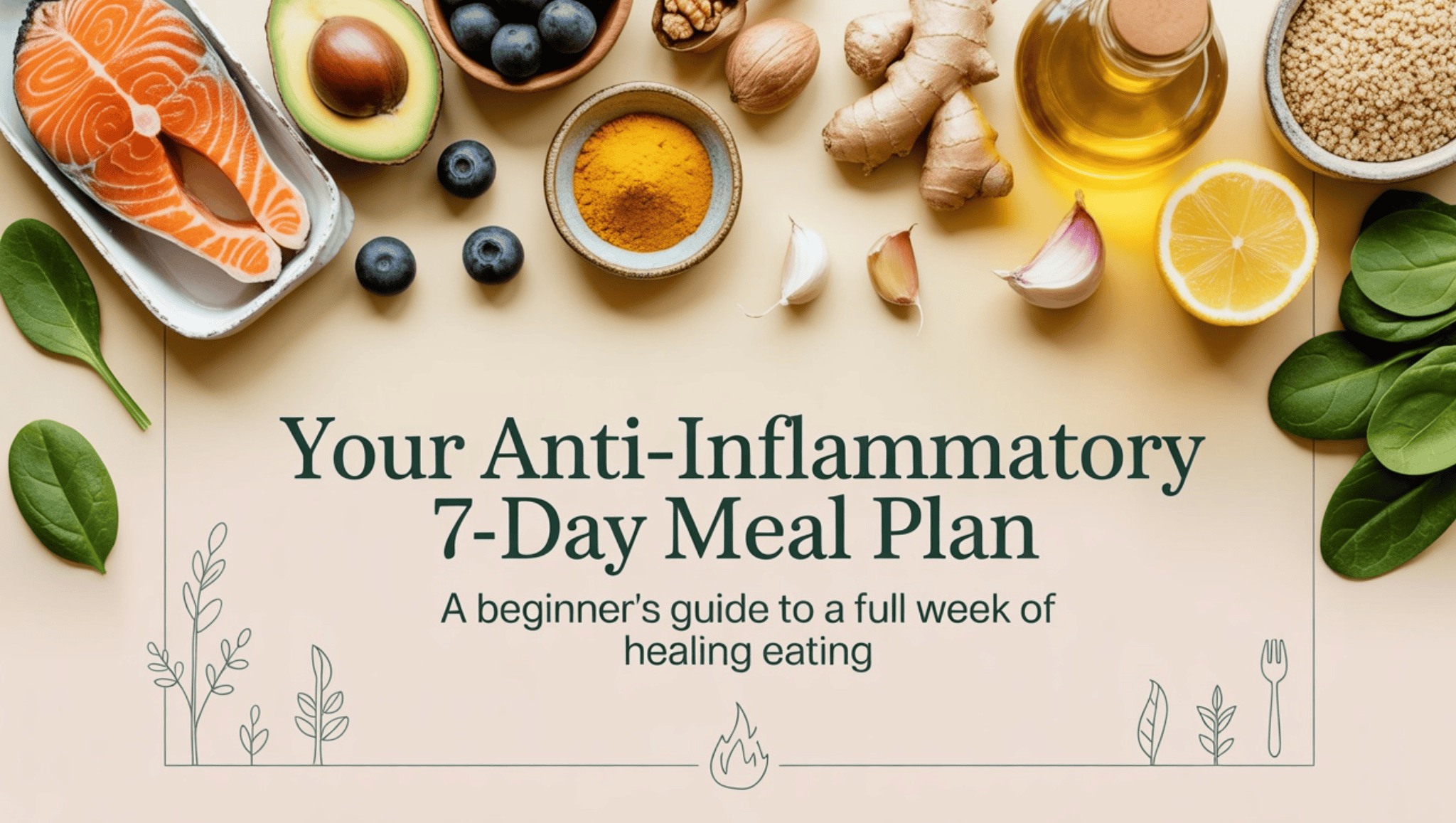
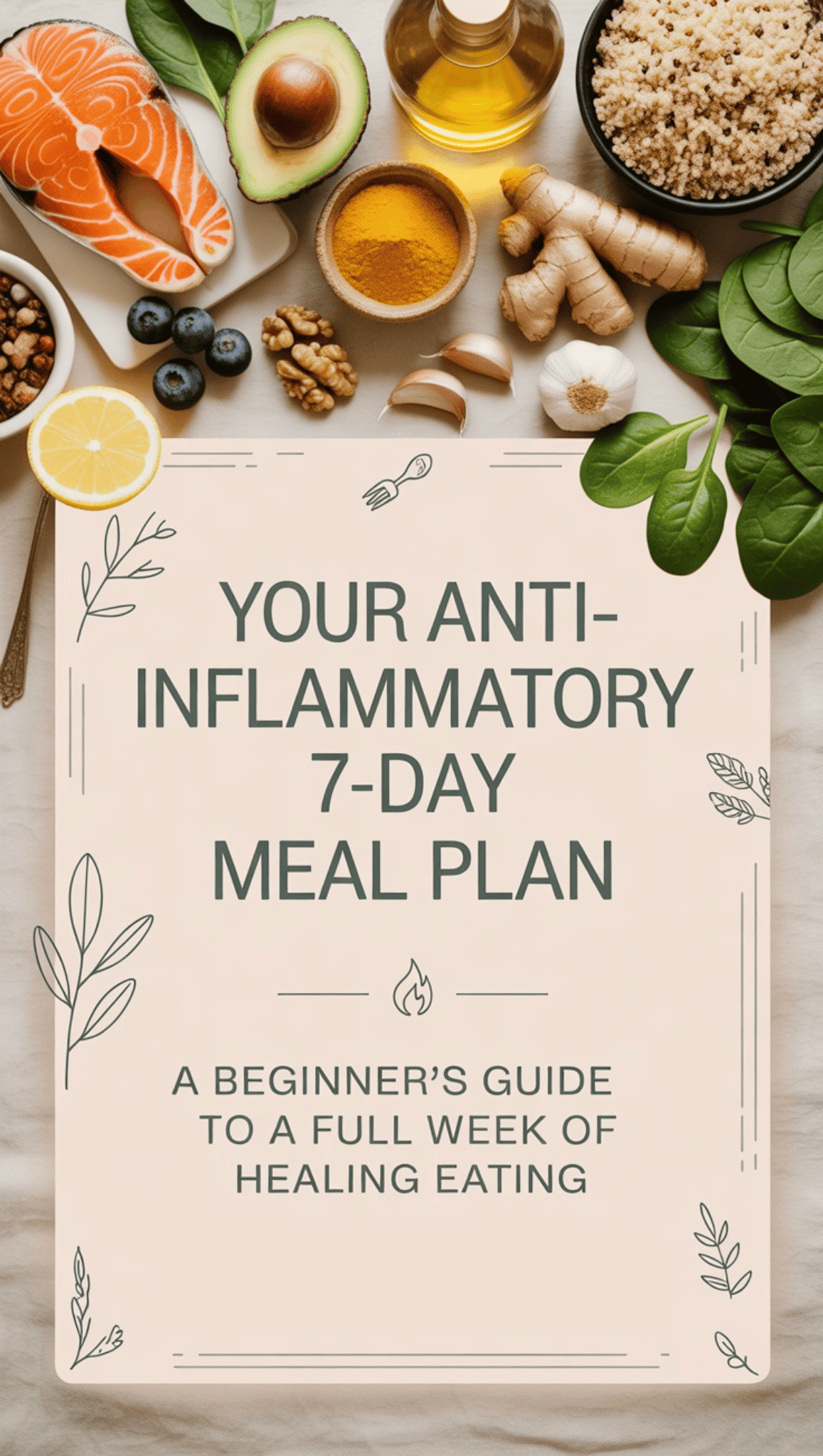
This is that plan. A full 7-day anti-inflammatory meal plan built for beginners — with a grocery list, batch cooking tips, budget swaps, and every single meal intentionally structured around adequate protein, healthy fat, fiber, and anti-inflammatory ingredients. No guessing. No plain salads calling themselves lunch. Just real, nourishing, satisfying food — organized into a week you can actually follow.
This post may contain affiliate links. I only recommend products and services I genuinely believe in. Additionally, some images on this website may have been created with the help of AI to convey the feeling and aesthetic I wish to share with my readers.
What You Might Need
Before we get into the plan, here’s what will set you up for success:
- 1–2 hours on Sunday: That’s all you need for batch cooking and prep.
- Glass containers or mason jars: For storing prepped food fresh all week.
- A grocery budget of any size: This plan works for $50 or less per week.
- A flexible mindset: Meals can be swapped between days freely — guidelines, not rules.
1. Understand What Makes a Meal Truly Anti-Inflammatory Before You Begin
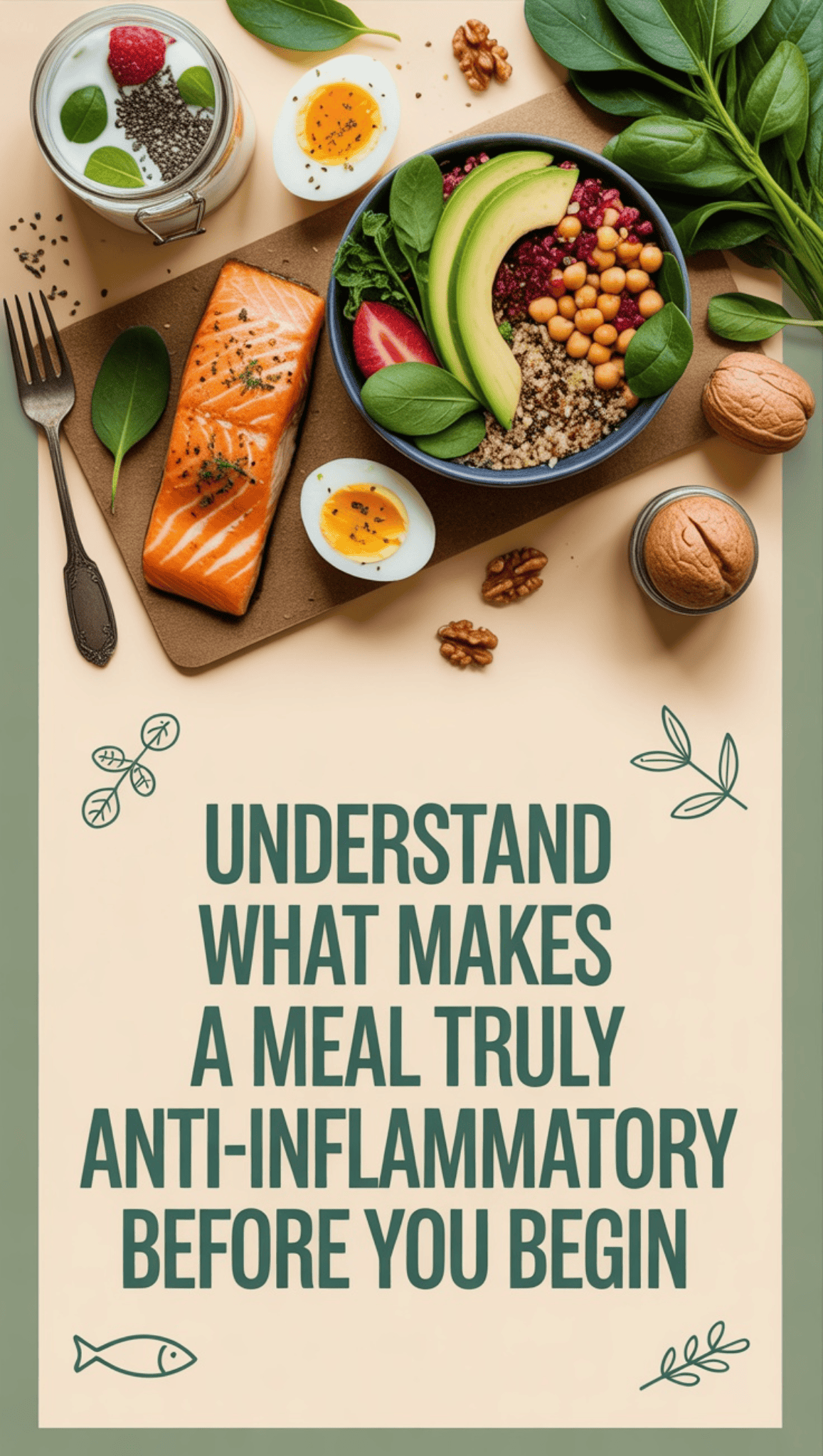
Before you shop or cook a single thing, understanding the framework behind this plan will make every choice feel intentional. The structure of your plate matters just as much as the ingredients on it. Every meal in this plan follows the same foundational structure — and once you internalize it, you’ll be able to build your own anti-inflammatory meals long after this week is over.
The Anti-Inflammatory Plate Formula
Every meal is built around: a quality protein source first, 50% colorful vegetables, and 25% whole grains or legumes — with healthy fat woven through every meal. Protein is the non-negotiable anchor. It keeps blood sugar stable, keeps you genuinely full, preserves muscle, and supports the cellular repair your body is doing while inflammation calms down. Without it, even the most beautifully anti-inflammatory meal will leave you hungry and reaching for something that undoes your work.
Why Protein at Every Single Meal Is Non-Negotiable
As a Holistic Nutrition Coach, one principle I teach every client is this: hitting 0.8–1.2 grams of protein per pound of body weight daily is foundational — not optional. Protein supports immune function, tissue repair, hormone balance, and satiety. Spreading that intake across every meal and snack throughout the day is far more effective than trying to hit your numbers in one or two sittings. Every breakfast, lunch, dinner, and snack in this plan has been built with this in mind. A meal without protein is not a complete meal — and you won’t find any here.
What to Expect During Your First Week
Most women notice improved digestion and more stable energy within 3–5 days. By day 7, many report feeling lighter, clearer, and less bloated. Some experience a brief adjustment in days 1–2 as the gut adapts to more fiber — completely normal and short-lived. Drink plenty of water, be patient, and remember: consistency over perfection is the only rule this week.
2. Stock Your Kitchen First — The Anti-Inflammatory Grocery List You Actually Need
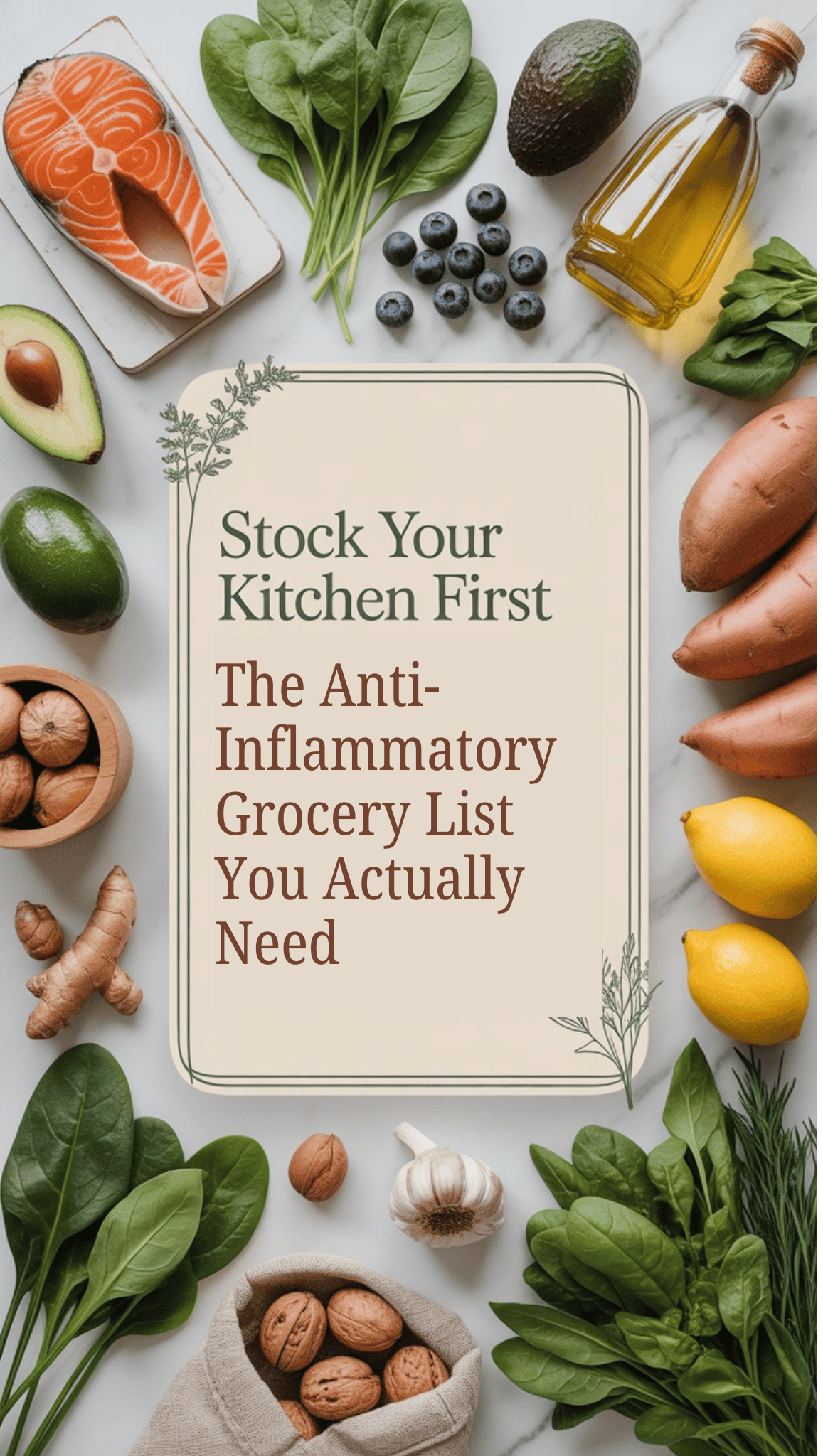
The most important step of this entire week happens before you cook a single meal. A well-stocked kitchen makes healthy choices automatic. Every item on this list was chosen for anti-inflammatory potency, protein contribution, affordability, and versatility — with ingredients that appear across multiple meals to minimize waste and simplify prep.
Proteins — The Foundation of Every Meal
- Wild salmon (fresh or frozen) — 2 servings (your 2 recommended fatty fish meals for the week)
- Canned sardines in olive oil — 1–2 cans (optional fatty fish swap)
- Canned tuna in olive oil — 1–2 cans (optional lean protein swap)
- Organic chicken breast — 3–4 servings, or chicken thighs for more flavor
- Ground turkey or turkey breast — 2–3 servings, versatile for bowls and stuffed dishes
- Organic eggs — 1 dozen
- Dried lentils or 2 cans lentils — plant protein and fiber powerhouse
- Canned chickpeas — 2 cans
- Canned black beans — 1 can
- Plain full-fat Greek yogurt — 1 large container
- Collagen powder or unflavored protein powder — 1 container (optional but recommended)
Produce — Fresh or Frozen
- Baby spinach and mixed leafy greens — 2 large bags
- Blueberries (fresh or frozen) — 2–3 cups
- Frozen mango chunks — 1 bag (Day 2 smoothie)
- Bananas — 3–4 ripe
- Sweet potatoes — 3–4 medium
- Broccoli — 1 large head or 1 large frozen bag
- Snap peas and red bell peppers — 1–2 each (Day 5 stir-fry)
- Avocados — 4–5 ripe
- Cherry tomatoes and cucumber — 1 pint tomatoes, 1 cucumber
- Celery — 1 bunch (snacks)
- Fresh ginger root — 1 hand
- Garlic — 1 bulb
- Lemons — 4–5
- Fresh herbs (parsley, cilantro, or basil) — 1–2 bunches
Milk of Choice
- Unsweetened soy milk — best choice for protein (complete amino acid profile), great in oats, smoothies, and chia pudding
- Unsweetened almond milk — light, mild flavor, widely available
- Unsweetened oat milk — creamy and naturally sweet, works well in oatmeal
- Light coconut milk — occasional use for richness; higher in saturated fat so use sparingly
Pick one or two that work best for you and use consistently throughout the week.
Healthy Fats and Pantry Staples
- Extra virgin olive oil — 1 quality bottle (primary cooking and dressing fat)
- Raw walnuts — 1 cup
- Raw almond butter — 1 jar
- Chia seeds — 1 bag
- Ground flaxseed — 1 bag
- Rolled oats — 1 bag
- Brown rice or quinoa — 2 cups dry (or one of each)
- Tahini — 1 jar (dressings and grain bowls throughout the week)
- Dijon mustard — 1 small jar (batch dressing)
- Raw honey — 1 small jar (snacks and oatmeal)
- Dark chocolate, 85%+ cacao — 1 bar (Day 5 snack)
- Fresh salsa — 1 jar (Day 3 dinner)
Anti-Inflammatory Spices
- Ground turmeric — always pair with black pepper to activate curcumin
- Black pepper
- Ground ginger and ground cinnamon
- Garlic powder, dried rosemary, red pepper flakes
- Cumin — for seasoning turkey and chicken
Budget tip: Frozen berries, fish, and vegetables retain virtually identical nutrition to fresh at a fraction of the cost. Building 50% of your produce shopping around frozen items can bring your total weekly spend to $50 or under.
3. Know Which Foods to Eat and Which to Avoid This Week
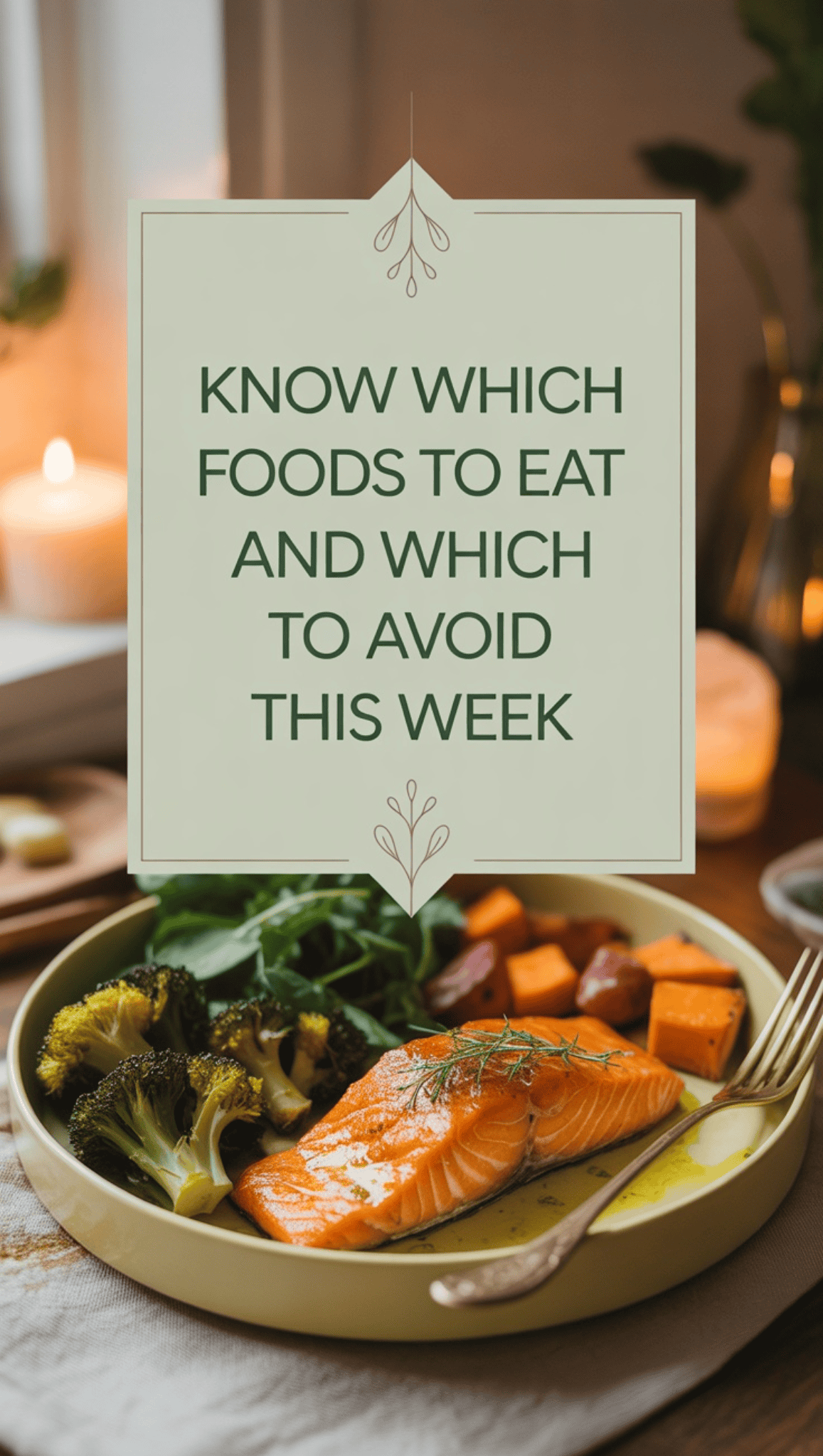
This isn’t about a forbidden foods list — it’s about giving your body a focused week where every meal is actively working to calm inflammation. Think of it as crowding out, not cutting out. The limit-this-week list is a 7-day experiment. Most women naturally want less of these foods after a week without them — because they feel so noticeably better.
Prioritize These Every Day
- Quality protein at every meal — chicken, turkey, eggs, Greek yogurt, legumes, and fatty fish 2x per week
- Leafy greens, colorful vegetables — antioxidant and magnesium-rich
- Berries — polyphenol and flavonoid dense
- Avocado and extra virgin olive oil — oleocanthal and healthy fat
- Walnuts, chia seeds, flaxseed — omega-3 and fiber
- Turmeric, ginger, garlic — curcumin, gingerol, and allicin
- Fermented foods (Greek yogurt, kimchi) — gut microbiome support
Limit or Sidestep This Week
- Added sugar and high-fructose corn syrup — drives inflammatory cytokines
- Refined grains (white bread, white pasta) — rapidly converted to sugar
- Refined seed oils (soybean, corn, cottonseed) — omega-6 imbalance
- Processed and packaged snacks — hidden inflammatory ingredients
- Alcohol — elevates inflammatory markers significantly
- Processed meats — preservatives and excess saturated fat
Grace Over Guilt
One off-plan meal does not undo your week. Inflammation is built over time — and so is healing. If you eat something off-plan, return to your next scheduled meal without judgment. Your body responds to the overall pattern of your eating — not one isolated choice.
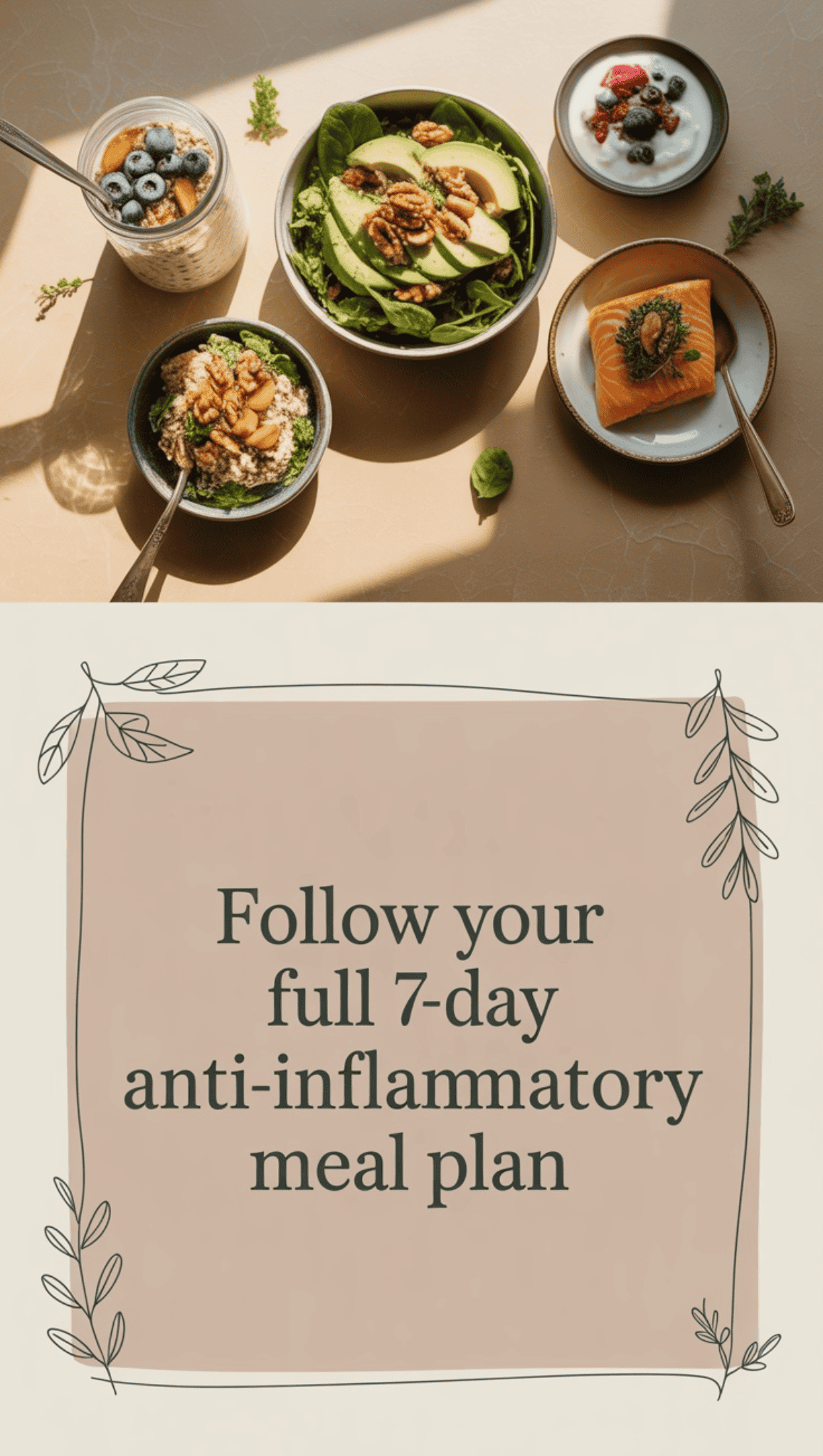
4. Follow Your Full 7-Day Anti-Inflammatory Meal Plan
Every meal below is built around a clear protein source first — followed by anti-inflammatory vegetables, healthy fat, and whole food carbohydrates. Add 4–6 oz of your chosen protein to every lunch and dinner. Each meal lists a suggested protein plus alternatives so you can choose what works best for your taste, budget, and week. Meals can be swapped freely between days, and leftovers are always encouraged.
A note on fatty fish: Fatty fish like salmon and sardines are among the most powerful anti-inflammatory proteins available — but 2 servings per week is the recommended guideline. The remaining meals rotate through lean poultry, turkey, eggs, legumes, and other clean proteins to give your body variety, balance your omega-3 intake naturally, and keep meals interesting all week.
Day 1 — Start Strong
- Breakfast: Overnight oats with rolled oats, chia seeds, a full scoop of almond butter (protein + fat), blueberries, and cinnamon. Add a scoop of unflavored protein powder or a side of Greek yogurt to boost protein. Prep the night before.
- Lunch: Large spinach salad with roasted sweet potato, cherry tomatoes, avocado, walnuts, and lemon-olive oil dressing. Add 4–6 oz of protein: 2–3 hard-boiled eggs, sliced grilled chicken breast, or ground turkey.
- Dinner: Baked turmeric salmon (4–6 oz) — one of your 2 recommended fatty fish meals this week — with roasted sweet potato wedges and steamed broccoli in olive oil and garlic. No fish? Swap for herb-baked chicken breast.
- Snack: Plain Greek yogurt with fresh berries and a drizzle of honey. Protein-rich and gut-supportive.
Anti-inflammatory star: Turmeric salmon — always pair turmeric with black pepper to maximize curcumin absorption.
Day 2 — Build Your Gut Foundation
- Breakfast: Turmeric golden smoothie with Greek yogurt (protein base), frozen mango, banana, turmeric, ginger, your milk of choice (unsweetened soy adds the most protein, almond and oat work beautifully too), and ground flaxseed. Add a scoop of collagen or protein powder for extra protein support.
- Lunch: Lentil and vegetable soup with garlic, turmeric, leafy greens, and a squeeze of lemon — batch-cook a large pot. Add 4–6 oz of protein on the side: sliced grilled chicken breast, ground turkey, or 2 hard-boiled eggs.
- Dinner: Quinoa bowl with 4–6 oz of ground turkey or diced chicken breast (seasoned with garlic, cumin, and turmeric), fresh spinach, avocado, roasted chickpeas, and tahini-lemon dressing.
- Snack: Two hard-boiled eggs with sliced cucumber and a pinch of red pepper flakes.
Anti-inflammatory star: Lentils — fiber-rich, protein-dense, and one of the most gut-nourishing foods in this entire plan.
Day 3 — Embrace the Power of Plants and Protein
- Breakfast: Scrambled eggs (3) with sautéed spinach and garlic in olive oil, served with half an avocado and red pepper flakes. Add a slice of turkey if you want more protein.
- Lunch: Anti-inflammatory protein power bowl — 4–6 oz of your protein choice over leafy greens with cherry tomatoes, cucumber, avocado, lemon juice, and olive oil. Choose: sardines (excellent omega-3 source), canned tuna, shredded chicken, or ground turkey.
- Dinner: Baked sweet potato stuffed with 4–6 oz of seasoned ground turkey or shredded chicken, topped with fresh salsa, avocado, and Greek yogurt in place of sour cream.
- Snack: Almond butter on celery sticks with a small handful of walnuts.
Anti-inflammatory star: If you choose sardines at lunch today, that completes your 2 recommended fatty fish servings for the week — the rest of the plan uses lean poultry and plant proteins.
Day 4 — Midweek Reset
- Breakfast: Chia seed pudding (made with your milk of choice and 4 tbsp chia seeds — unsweetened soy boosts the protein content significantly) topped with sliced banana, berries, and cinnamon. Prep the night before. Add Greek yogurt on the side for protein.
- Lunch: Warm grain bowl — brown rice or quinoa with 4–6 oz of shredded chicken breast or ground turkey, roasted broccoli, sweet potato, leafy greens, and tahini-lemon dressing.
- Dinner: Herb-roasted chicken thighs (4–6 oz, skin-on for healthy fat) with garlic, rosemary, and olive oil, served alongside steamed leafy greens and brown rice. Swap for ground turkey patties if preferred.
- Snack: Greek yogurt with ground flaxseed, chia seeds, and a handful of blueberries.
Anti-inflammatory star: Chia seeds — two tablespoons deliver plant-based omega-3, fiber, calcium, and magnesium in one small serving.
Day 5 — Keep It Simple and Satisfying
- Breakfast: Overnight oats (same as Day 1 — batch prep makes this zero-effort) with almond butter, chia seeds, blueberries, and cinnamon. Add Greek yogurt on the side or stir in protein powder.
- Lunch: Large anti-inflammatory protein salad — mixed greens with walnuts, avocado, roasted chickpeas, cherry tomatoes, and lemon-olive oil dressing. Add 4–6 oz of: sliced turkey breast, grilled chicken, 2–3 hard-boiled eggs, or canned tuna.
- Dinner: Ginger and garlic stir-fry with broccoli, red bell pepper, and snap peas over brown rice. Add 4–6 oz of: chicken breast, ground turkey, or shrimp — all cook in under 10 minutes and absorb the ginger-garlic beautifully.
- Snack: A small handful of walnuts and two squares of dark chocolate (85%+ cacao).
Anti-inflammatory star: Ginger — gingerol directly reduces inflammatory markers and eases digestive discomfort.
Day 6 — Slow Down and Nourish
- Breakfast: Warm turmeric protein oatmeal — rolled oats cooked in your milk of choice (unsweetened soy, almond, or oat milk all work well) with turmeric, cinnamon, and ginger, topped with almond butter, walnuts, and berries. Add Greek yogurt on the side for a protein boost.
- Lunch: Lentil soup (batch-cooked Day 2) reheated and served with 4–6 oz of protein on the side: sliced turkey breast, 2 hard-boiled eggs, or grilled chicken strips. Add a simple green salad with olive oil.
- Dinner: Herb-baked chicken thighs or turkey tenderloin (4–6 oz) with roasted broccoli and garlic, served alongside quinoa tossed in olive oil and fresh herbs.
- Snack: Greek yogurt with chia seeds, walnuts, and a drizzle of honey.
Anti-inflammatory star: Turkey is one of the leanest anti-inflammatory proteins available — high in tryptophan, which supports serotonin production and sleep quality.
Day 7 — End the Week Feeling Strong
- Breakfast: Anti-inflammatory protein smoothie bowl — Greek yogurt base blended with frozen blueberries, spinach, ginger, and your milk of choice (unsweetened soy, almond, or oat), topped with chia seeds, walnuts, and fresh berries.
- Lunch: Chickpea and avocado grain bowl — roasted chickpeas over quinoa with spinach, cherry tomatoes, avocado, and tahini-lemon dressing. Add 4–6 oz of grilled chicken breast or turkey for extra protein, or keep it plant-based and add an extra half cup of chickpeas.
- Dinner: Celebration plate — your choice of protein (4–6 oz grilled chicken, turkey tenderloin, baked cod, or shrimp) with roasted broccoli, warm lentils, and a drizzle of olive oil and fresh lemon. Simple, satisfying, and a full-circle finish to your week.
- Snack: Two hard-boiled eggs with sliced cucumber and a cup of herbal ginger tea.
Day 7 star: You — seven days of protein-forward, anti-inflammatory eating is something to be genuinely proud of. Notice how you feel today compared to Day 1.
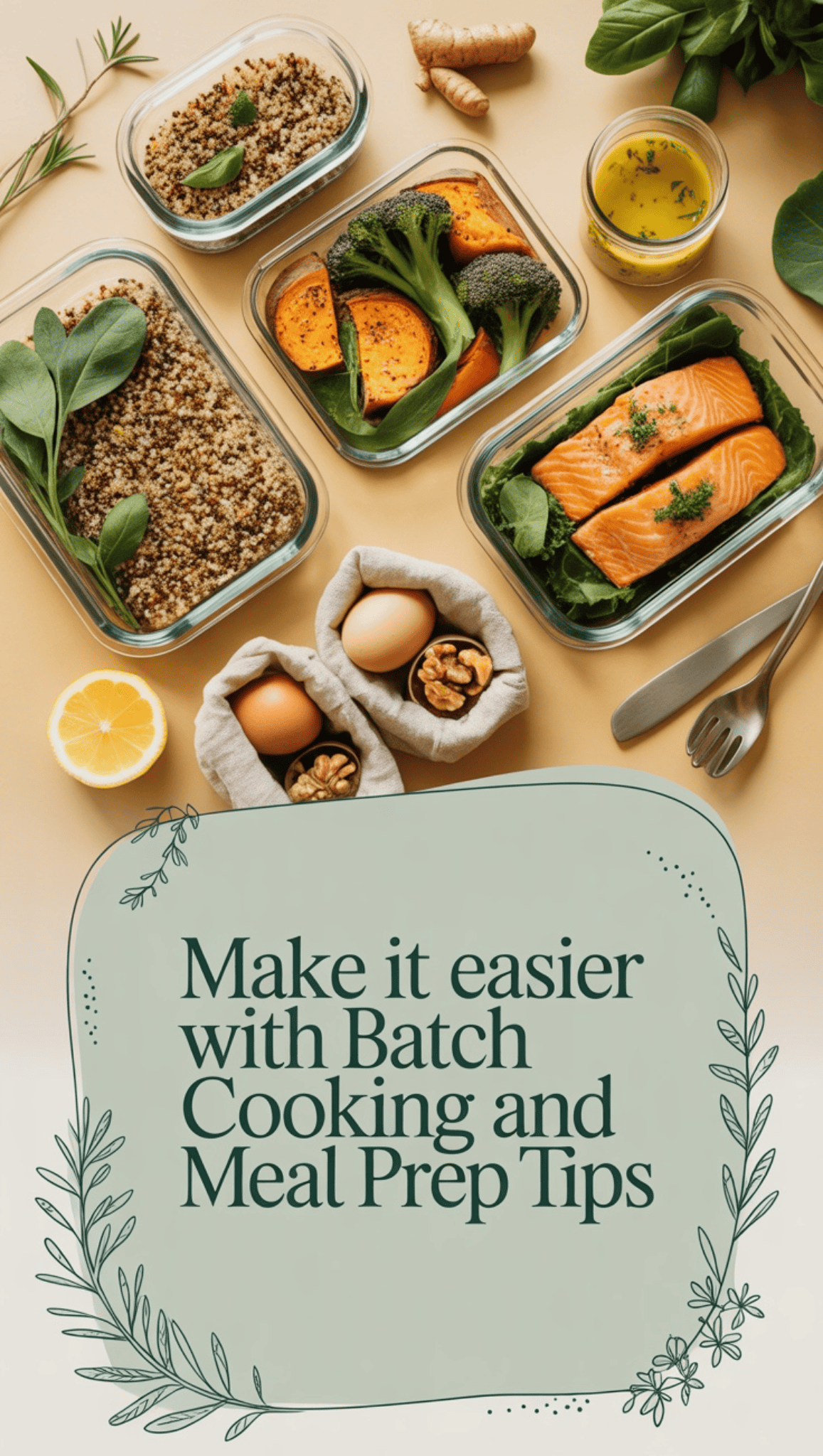
5. Make It Easier With Batch Cooking and Meal Prep Tips
The secret to making this plan feel effortless isn’t discipline — it’s one good Sunday afternoon. When the building blocks of your meals are already prepped and waiting, healthy choices become automatic. You don’t need to cook every meal in advance. You just need to prepare five simple staples — the Sunday Five — in under 90 minutes.
- A cooked grain: Large batch of brown rice or quinoa — stores 5 days refrigerated.
- A roasted vegetable: Two sheet pans: sweet potato cubes, broccoli, red bell peppers — seasoned with olive oil, garlic, turmeric.
- A cooked protein: Bake two salmon fillets. Cook a pot of lentils. Drain and rinse chickpeas. These anchor 4–5 meals.
- A simple dressing: Lemon juice, olive oil, garlic, Dijon mustard — stored in a jar, lasts all week.
- Grab-and-go snacks: Pre-portion walnuts. Hard-boil 6 eggs. Prep two overnight oats and one chia pudding.
Time-saving shortcuts: Pre-washed greens, frozen berries, canned sardines and chickpeas, and hard-boiled eggs are your fastest anti-inflammatory protein tools. Use them freely.
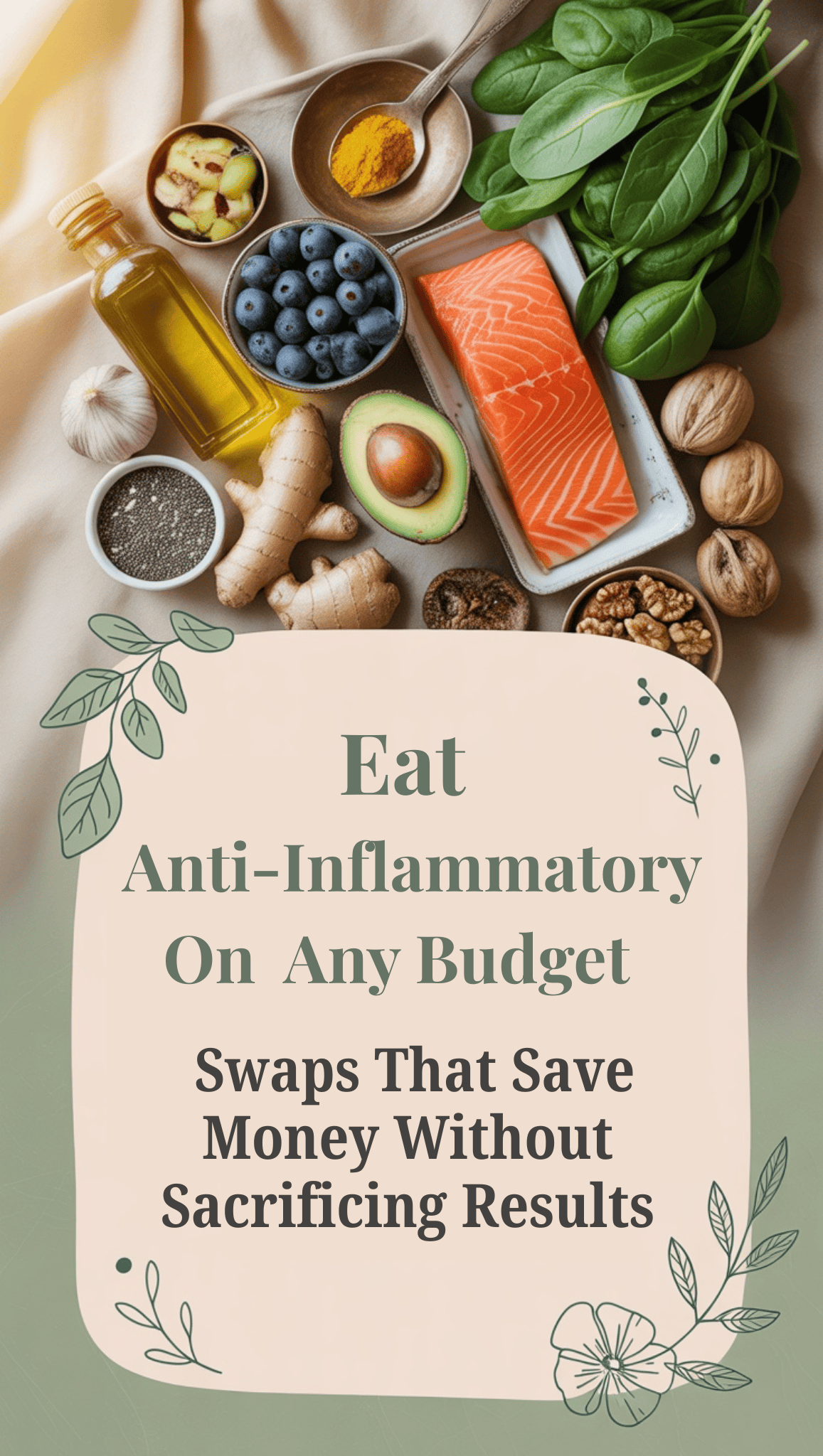
6. Eat Anti-Inflammatory on Any Budget — Swaps That Save Money Without Sacrificing Results
Some of the most powerful anti-inflammatory and protein-rich foods on the planet are also the most affordable. Dried lentils. Canned sardines. Eggs. Greek yogurt. Rolled oats. Sweet potatoes. Frozen berries. These aren’t budget compromises — they’re nutritional powerhouses. Anti-inflammatory eating is not a privilege reserved for large grocery budgets. It’s accessible right now, exactly where you are.
Most Affordable High-Protein Anti-Inflammatory Staples
- Eggs — complete protein, anti-inflammatory choline, versatile in every meal
- Canned sardines in olive oil — highest omega-3 per dollar of any protein
- Dried lentils and canned chickpeas — cheapest plant protein available
- Plain Greek yogurt — protein-rich, probiotic, and budget-friendly
- Frozen salmon portions — flash-frozen at peak freshness, often half the price of fresh
- Rolled oats — fiber-rich, affordable, and endlessly versatile
- Frozen blueberries and spinach — identical nutrition to fresh at a fraction of the cost
The One Investment Worth Making
Spend more on one thing: a quality extra virgin olive oil. The oleocanthal responsible for its anti-inflammatory effects degrades in low-quality oils. Look for cold-pressed, first-press EVOO in a dark bottle. Used daily as your primary cooking and dressing fat, one quality bottle lasts 2–3 weeks and delivers real results.
7. What to Do After Your 7 Days — How to Keep the Momentum Going
You did it. Take a moment to notice how you feel right now compared to Day 1. More energy? Less bloating? Joints that feel a little more comfortable? That’s your body responding to consistent, protein-forward, anti-inflammatory nourishment — and it wants more.
How to Assess Your Week
- Energy — do you wake up feeling more rested than 7 days ago?
- Digestion — has bloating or heaviness improved?
- Mental clarity — less afternoon brain fog?
- Joint comfort — even small reductions in stiffness are meaningful progress
- Mood — many women feel calmer and more emotionally steady
- Sleep — anti-inflammatory eating often improves sleep depth within the first week
The 80/20 Approach Going Forward
You don’t need to follow this plan exactly forever. Eat anti-inflammatory 80% of the time — with full, guilt-free permission for the other 20%. Social dinners, birthday cake, a spontaneous pizza night — these are part of a full life. What matters is the overall pattern: most meals, most of the time, built around the foods and protein levels that heal you.
Ready for Support Built Around You?
If part of you is thinking “I don’t want to figure out what comes next alone” — that feeling is worth listening to. As a NBC-HWC (National Board Certified Health & Wellness Coach), Holistic Nutrition Coach, certified Weight Loss Specialist, and certified Gut Health Nutrition Specialist, I bring a whole-body lens to every client I work with. This isn’t just about eating cleaner — it’s about understanding how your gut, your weight, your hormones, and your inflammation are all connected.
Here’s what that means for you specifically:
- If gut health is your focus — bloating, irregular digestion, food sensitivities, or a gut that just feels “off” — I help you identify what’s disrupting your microbiome, repair your gut lining, and build an eating plan that calms gut-driven inflammation from the inside out.
- If weight loss is your goal — we go beyond calories. Chronic inflammation, gut imbalance, blood sugar instability, and undereating protein are often the real reasons weight won’t move — and that’s exactly the work we do together.
- If you want whole-body healing — we build a personalized anti-inflammatory eating framework around your unique body, health history, lifestyle, and protein needs — with the structure and accountability to make lasting change real.
You don’t need a diagnosis to start. You just need to decide that feeling genuinely well is worth investing in.
Final Thoughts
Here’s the truth: this week was never really about the food. It was about proving to yourself that you can show up for your own health — consistently, compassionately, and with protein at every single meal — one day at a time.
You now have the grocery list, the meal plan, the batch cooking rhythm, the budget swaps, and the protein-forward foundation to keep going. Everything you need is already in your hands. The only step left is the one you take next — toward the kitchen, toward your health, and toward the version of yourself that feels genuinely, deeply well. You’ve already started. Keep going. 💚
This post may contain affiliate links. I only recommend products and services I genuinely believe in. Additionally, some images on this website may have been created with the help of AI to convey the feeling and aesthetic I wish to share with my readers.
Frequently Asked Questions
Can I repeat meals throughout the week?
Absolutely — and it’s encouraged. Repeating meals reduces prep time, cuts food waste, and keeps costs down. If Day 1’s overnight oats work for you, eat them every morning. The anti-inflammatory and protein benefits are identical regardless of repetition.
What if I don’t eat fish?
Replace fish with other quality protein sources — organic chicken, eggs, Greek yogurt, lentils, chickpeas, or hemp seeds. For omega-3, add extra walnuts, chia seeds, and ground flaxseed daily, and consider an algae-based omega-3 supplement which provides DHA and EPA directly.
How much does this plan cost per week?
With strategic shopping — frozen produce, canned proteins, dried legumes, and bulk grains — this plan runs approximately $45–$60 per week for one person. The first week may cost slightly more as you build out your spice pantry. From week two onward your cost drops significantly.
How do I know I’m getting enough protein each day?
A helpful starting point is 0.8–1.2 grams of protein per pound of body weight daily, spread across all meals and snacks. Every meal in this plan includes a protein source — but portion sizes matter. A 150-pound woman aiming for 1g per pound needs roughly 150g of protein daily, which means protein at every meal is not optional — it’s essential. If you want a personalized protein target built around your specific body and goals, that’s exactly the kind of work I do with my coaching clients.
Can I follow this plan with a diagnosed autoimmune condition?
This plan is built around broadly anti-inflammatory whole foods well-tolerated by most people. However, if you have a diagnosed autoimmune condition, working with a holistic nutrition coach or healthcare provider alongside this plan is strongly recommended. Some women benefit from additional modifications — such as removing nightshades or following a targeted elimination protocol — that go beyond a general beginner plan.
About The Author
Jahlila Bastian is a National Board Certified Health & Wellness Coach (NBC-HWC), Certified Personal Trainer, and Holistic Nutrition Coach who helps women 40+ build stronger, healthier bodies and create a sustainable way of caring for themselves. With additional specializations in weight loss, physique and body composition, and gut health nutrition, her expertise spans nutrition, strength and fitness, healthy weight management, behavior change, and sustainable lifestyle habits.
Jahlila is the creator of The Tri-Sync Method™, her whole-self approach to wellness built around a Strong Body, Steady Mind, and Connected Self. Through practical education and personalized coaching, she helps women work toward the health and body goals that matter to them while building healthier habits, greater confidence, and a way of living that supports who they’re becoming.
Want to learn more about Jahlila and her approach? Meet Jahlila



Leave a Reply