

Table of Contents
Most people blame their mood, energy crashes, and stubborn health issues on stress or genetics. But what if the real culprit has been living inside you all along — a hidden ecosystem of 40 to 100 trillion microbial cells quietly controlling your body from the inside out?
Here’s what nobody tells you: your gut isn’t just a digestive tube. It’s a living, breathing command center. And when its balance tips in the wrong direction, everything — from your metabolism to your cancer risk — can spiral. I’ve been down that road. The bloating, the brain fog, the chronic exhaustion. It wasn’t until I learned the truth about my microbiome that things finally started to shift!
This post may contain affiliate links. I only recommend products and services I genuinely believe in. Additionally, some images on this website may have been created with the help of AI to convey the feeling and aesthetic I wish to share with my readers.
What You Might Need
Before we dive into these gut health secrets, here’s what to keep in mind:
- Time commitment: 10–15 minutes a day to start implementing small changes
- Budget: $0–$30/month (most fixes are food-based, not supplement-based)
- Mindset shift: Stop thinking of bacteria as the enemy — your “good bugs” are your greatest allies
- No prior knowledge needed: This guide meets you exactly where you are
- Openness to change: Some of what you read here will challenge everything you thought you knew
1. Your Gut Hosts a Living Ecosystem More Complex Than a Rainforest

What if I told you that the microbial world inside your gut is more diverse than some of Earth’s richest ecosystems? It’s true. Your gut is home to approximately 500 species of bacteria — and that number alone doesn’t capture the sheer scale of what’s happening inside you.
I remember the first time I really understood this. It wasn’t abstract anymore. These weren’t just “germs.” They were a thriving, interdependent community — producing things my body literally could not survive without.
The Staggering Scale of Your Inner World
Your gut microbiome contains between 40 and 100 trillion microbial cells — outnumbering your own human cells. Research suggests this ecosystem is as unique to you as your fingerprint. No two microbiomes are identical, which is exactly why a one-size-fits-all approach to gut health rarely works.
How Your Microbiome Produces Life-Sustaining Compounds
Your gut flora doesn’t just sit there — it works. It synthesizes vitamins like B12, K2, and folate, produces short-chain fatty acids that fuel your colon cells, and generates neurotransmitters like serotonin. Without a healthy microbiome, your body’s ability to absorb and create essential nutrients drops dramatically.
Pairing Microbiome Awareness with a Whole-Foods Diet for Maximum Impact
When you feed your microbiome fiber-rich, whole foods, you’re not just eating — you’re cultivating. Think of every meal as either planting seeds for good bacteria or fertilizing weeds. Pair this awareness with meals built around plants, legumes, and fermented foods and watch the ecosystem flourish within weeks.
How to Start Nourishing Your Inner Ecosystem Today
- Add one fermented food daily — yogurt, kimchi, kefir, or sauerkraut (notice the tangy taste; that’s live cultures)
- Aim for 30 different plant foods per week — variety feeds microbial diversity
- Swap one processed snack for a fiber-rich alternative like apple slices or roasted chickpeas
- Drink water consistently — hydration supports microbial transport through your gut
- Feel the shift — most people notice reduced bloating within 7–10 days of consistent changes
Your gut is not a passive system. It’s alive — and it responds fast when you start paying attention.
Not sure what to eat for a healthier gut?
I put together a free Gut Health Grocery List with every food your microbiome needs — organized by category with tips on how to use each one. Just click the button below, and it’s yours!
2. Your Gut Flora Controls Way More Than Just Digestion

Here’s what nobody tells you about your gut: digestion is actually the least interesting thing it does. While you’re focused on what goes in and what comes out, your microbiome is quietly managing systems you’d never expect — and most people have no idea.
When I learned that gut bacteria influence inflammation, metabolism, and even cancer risk, I had to sit with that for a moment. It felt like I’d been handed a manual for my body that nobody had bothered to give me before.
The Gut–Metabolism Connection That Affects Your Weight
Research now shows that the composition of your gut microbiome can influence how efficiently your body extracts calories from food and how your body stores fat. Two people eating the same meal can have completely different metabolic outcomes depending on their gut bacteria. Studies have found that people with lower microbial diversity tend to have higher rates of obesity and insulin resistance.
How Gut Bacteria Regulate Your Body’s Inflammation Levels
Your gut lining is one of your body’s primary immune barriers. When your microbiome is balanced, it signals your immune system to stay calm and measured. When it’s disrupted, inflammatory signals spike — contributing to conditions like arthritis, skin issues, and cardiovascular disease. Gut health isn’t just about your stomach; it’s about your entire inflammatory load.
Pairing Gut Health with Anti-Inflammatory Foods for Whole-Body Protection
Omega-3s, polyphenols, and prebiotic fiber work synergistically with your gut bacteria to keep inflammation in check. Foods like wild salmon, blueberries, walnuts, and extra virgin olive oil don’t just nourish you — they actively feed the bacteria that keep your immune system calibrated.
How to Reduce Inflammation Through Your Gut
- Start your morning with warm lemon water — it gently stimulates digestive enzyme production
- Add a tablespoon of extra virgin olive oil to one meal daily (feel the richness; it’s full of polyphenols)
- Include a handful of blueberries as a daily snack — the polyphenols selectively feed beneficial bacteria
- Cut back on refined sugar — even a 3-day reduction can measurably shift your microbiome composition
- Watch for signs it’s working: reduced puffiness, better skin clarity, more stable energy levels within 2 weeks
Your gut has more power over your health than any supplement on the market. And it’s been there waiting for you to tap into it.
3. The “Good Bugs” in Your Gut Are Literally Keeping You Alive
What if I told you that the wellness you’re chasing — the energy, the clear skin, the sharp mind — is directly linked to the health of tiny bacteria living in your intestines right now? Thousands of studies confirm it. Your “good bugs” aren’t a wellness buzzword. They’re a biological necessity.
I used to think probiotics were just a trend. Then I started understanding why the friendly bacteria matter — and it changed how I approached everything from what I eat to how I sleep.
Benefits of a Thriving Microbiome for Long-Term Disease Prevention
A diverse, healthy microbiome has been linked to reduced risk of colon cancer, type 2 diabetes, and even Alzheimer’s disease. Research published in Nature found that higher microbial diversity is one of the strongest predictors of long-term health outcomes — stronger, in some studies, than cholesterol levels or BMI.
Enhancing Immune Function Through Probiotic-Rich Foods
About 70% of your immune system lives in your gut. When good bacteria thrive, they train your immune cells to distinguish between real threats and harmless substances. This reduces your risk of both infections and autoimmune overreactions. Fermented foods deliver live cultures that actively reinforce this immune education process.
Pairing Probiotics with Prebiotics for a Maximum Microbiome Boost
Probiotics (live bacteria) need prebiotics (their food) to survive and multiply. Think of it like planting seeds — you need good soil too. Pair probiotic-rich foods like yogurt or kimchi with prebiotic foods like garlic, onions, bananas, and oats. This combination is clinically shown to produce stronger colonization of beneficial strains.
How to Build a Probiotic–Prebiotic Routine That Actually Works
- Morning: Add a banana (prebiotic) to your breakfast alongside Greek yogurt (probiotic)
- Lunch: Include raw garlic or onion in a salad dressing — notice the savory depth it adds
- Dinner: Serve a side of sauerkraut or kimchi — start with 2 tablespoons and build up
- Troubleshooting: Gas or bloating when starting? That’s normal. Slow your introduction over 2 weeks
- Success marker: Improved regularity, better sleep quality, and steadier energy within 3–4 weeks
When your good bugs flourish, you flourish. It really is that connected.
4. When Your Microbiome Goes Wrong — The Toxic Spiral Nobody Warns You About

Here’s a hard truth: most modern lifestyles are actively destroying the gut environment. Processed foods, chronic stress, antibiotics, poor sleep — these aren’t just bad habits. They are selective killers, wiping out the very bacteria your body depends on to function.
I had no idea my afternoon diet soda and late-night scrolling were quietly tipping my microbiome out of balance. By the time symptoms showed up — the fatigue, the mood dips, the digestive drama — the damage had already been building for years.
The Dangers of Dysbiosis for Gut and Whole-Body Health
Dysbiosis — the medical term for microbial imbalance — occurs when unfriendly bacteria crowd out the friendly ones. When this happens, the gut lining becomes permeable (often called “leaky gut”), inflammatory compounds enter the bloodstream, and the immune system goes into a chronic low-grade alarm state. This is now linked to IBS, depression, obesity, and autoimmune diseases.
Enhancing Recovery from Dysbiosis Through Targeted Lifestyle Shifts
The good news? Your microbiome is remarkably resilient. Studies show meaningful microbial changes can occur within 72 hours of dietary shifts. The key is consistency — not perfection. Reducing ultra-processed food, managing stress, and prioritizing sleep gives good bacteria the space to reclaim their territory.
Pairing Gut Restoration with Stress Management for Accelerated Healing
The gut-brain axis means your nervous system and your microbiome talk constantly. Chronic stress floods your gut with cortisol, which disrupts microbial balance just as much as poor diet does. Pairing dietary changes with even 10 minutes of daily breathwork or meditation creates a dramatically more favorable environment for gut healing.
How to Begin Reversing Dysbiosis Starting This Week
- Eliminate one ultra-processed food from your daily routine — notice how quickly cravings shift
- Add a 5–10 minute breathing exercise each morning to lower cortisol before breakfast
- Prioritize 7–8 hours of sleep — the microbiome undergoes repair cycles during deep sleep
- Reintroduce fermented foods slowly — start every other day to avoid overwhelming your system
- Watch for green flags: reduced bloating, more consistent moods, less sugar craving within 2–3 weeks
You didn’t damage your microbiome overnight — and you won’t heal it overnight either. But the turnaround can start today.
5. Your Gut and Brain Are Having a Conversation You Don’t Know About

What if I told you your gut has its own nervous system — sometimes called the “second brain” — with over 500 million neurons wiring it directly to your mind? This isn’t metaphor. It’s biology. And it means your anxiety, your mood swings, and your mental fog may have a gut-level origin.
The first time I connected a week of poor eating to a stretch of low mood and mental cloudiness, everything clicked. My gut wasn’t just affecting my stomach — it was affecting me.
Benefits of a Healthy Gut-Brain Axis for Mental Clarity and Mood
90% of your body’s serotonin — the neurotransmitter most associated with happiness — is produced in the gut. When your microbiome is thriving, serotonin production is optimal. Studies show people with higher gut microbial diversity report lower rates of anxiety and depression and better cognitive performance under stress.
Enhancing Emotional Resilience Through Gut-Supportive Nutrition
The gut-brain axis operates via the vagus nerve, transmitting signals in both directions. Feeding your microbiome with prebiotic fiber and fermented foods doesn’t just help digestion — it actively supports the production of mood-regulating neurotransmitters. Think of it as feeding your feelings — literally.
Pairing Gut Nutrition with Sleep Optimization for Peak Mental Performance
Your microbiome produces melatonin precursors and GABA — compounds essential for deep, restorative sleep. When your gut is healthy, sleep quality improves. Better sleep further reduces cortisol, which protects your microbiome. This positive feedback loop is one of the most powerful, underrated tools in mental wellness.
How to Nourish the Gut-Brain Connection Daily
- Eat tryptophan-rich foods (eggs, turkey, pumpkin seeds) to support serotonin production — notice mood shifts within days
- Incorporate magnesium-rich foods like dark leafy greens and dark chocolate to support vagal tone
- Limit alcohol — even moderate consumption measurably disrupts the gut-brain signaling pathway
- Take a 10-minute walk after meals — this stimulates the vagus nerve and aids microbial activity
- Success sign: Waking up with a clearer head and steadier emotional baseline within 2–3 weeks
Your gut is talking to your brain right now. The only question is — what is it saying?
6. The Foods Quietly Destroying Your Microbiome Every Single Day
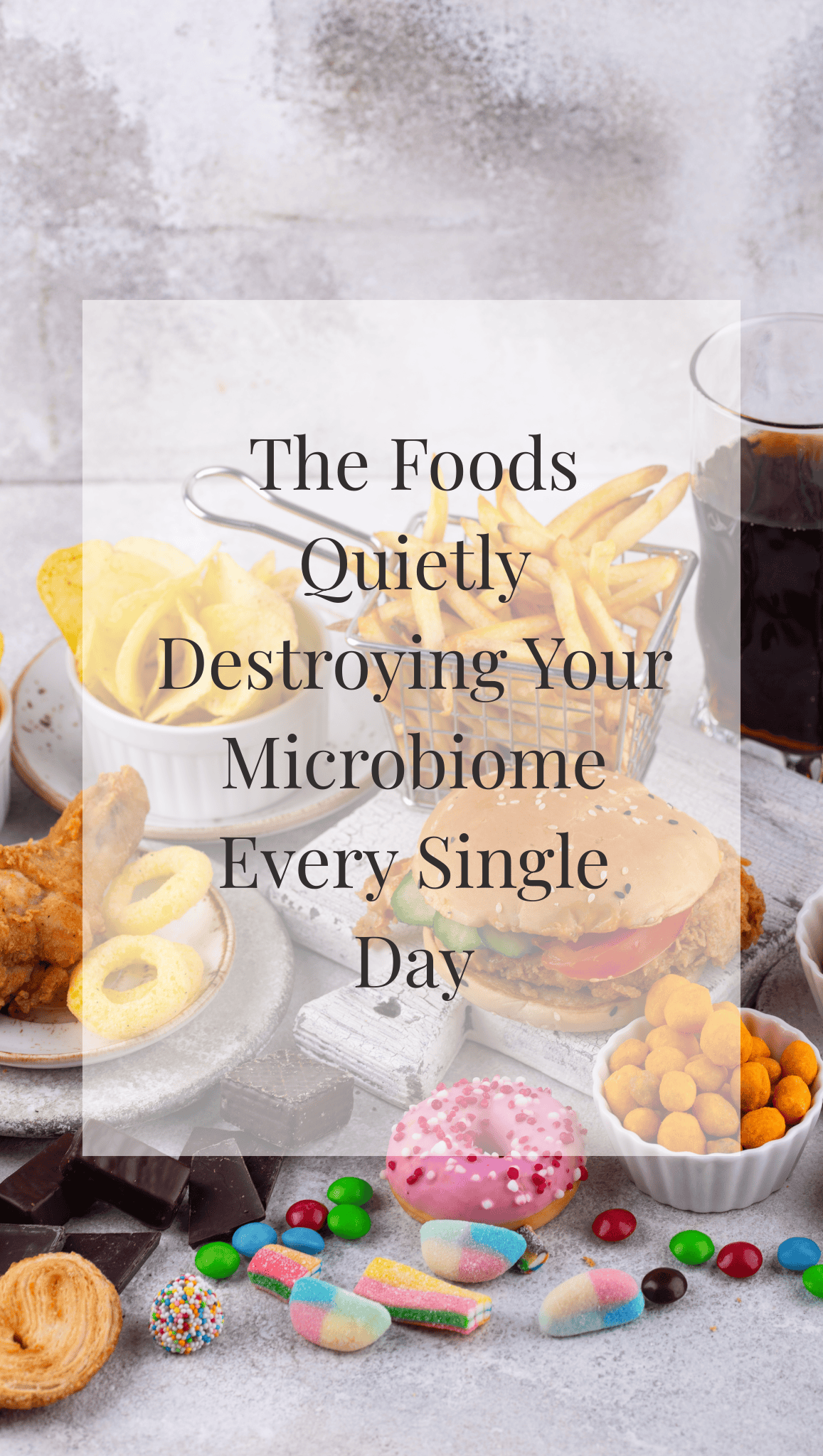
Here’s the uncomfortable truth: the Standard American Diet is a microbial disaster. The foods most marketed as convenient, affordable, and delicious are, at a biological level, stripping your gut of its greatest defenders — one meal at a time.
I grew up thinking a “balanced diet” meant mixing protein with carbs. Nobody told me that the type of carbs and the processing level of my food were systematically starving my good bacteria.
The Dangers of Ultra-Processed Foods for Microbial Diversity
Research from King’s College London found that people who regularly consume ultra-processed foods have significantly lower microbial diversity — a key marker of gut health. Emulsifiers, artificial sweeteners, and preservatives don’t just pass through. They actively alter the gut environment, suppressing the growth of beneficial bacterial strains.
Enhancing Microbial Diversity by Expanding Your Plate’s Color Range
Polyphenols — the pigments that give plants their color — are among the most powerful microbiome-supporting compounds known to science. The wider the range of colorful plants you eat, the more diverse your bacterial colony becomes. Studies show eating 30+ different plant foods per week significantly increases microbial richness.
Pairing a Plant-Diverse Diet with Mindful Eating for Optimal Gut Absorption
How you eat matters as much as what you eat. Eating quickly under stress triggers a fight-or-flight response that reduces digestive enzyme production and blood flow to the gut. Eating slowly, chewing thoroughly, and eating without screens gives your microbiome the optimal environment to process food and absorb nutrients.
How to Audit and Upgrade Your Diet for Microbiome Health
- Read one ingredient label today — if you can’t pronounce more than 3 ingredients, reconsider it
- Add one new vegetable or legume per week to build plant diversity without overwhelm
- Replace one sweetened drink with water or herbal tea — feel the sugar cravings diminish within a week
- Chew each bite 20 times — it sounds silly until you notice how much better you digest
- Troubleshooting: Digestive discomfort when adding fiber? Increase water intake simultaneously
Every meal is either a gift or a threat to your microbiome. You get to choose — three times a day.
7. How to Build a Gut-Healing Routine That Actually Sticks

What if rebuilding your microbiome didn’t require a complete lifestyle overhaul, an expensive protocol, or a refrigerator full of supplements? Here’s what the research — and real experience — shows: small, consistent actions compound into dramatic results when it comes to gut health.
I didn’t transform my gut health in a weekend. It happened in the quiet accumulation of daily choices that, one by one, started adding up to something I could actually feel.
Benefits of a Consistent Gut Health Routine for Sustainable Wellness
Consistency beats intensity in microbiome science. A 2023 study found that participants who made moderate but consistent dietary changes over 8 weeks showed greater microbial diversity improvements than those who followed aggressive short-term protocols. Your gut flora responds to patterns, not perfection.
Enhancing Your Routine by Tracking Gut Health Signals
Your body gives you real-time feedback on your microbiome health — if you know what to look for. Bowel regularity, skin clarity, energy consistency, mood stability, and sleep quality are all external signals of internal microbial balance. Start noticing them as data points, not annoyances.
Pairing Daily Habits with a Gut Health Journal for Accelerated Progress
Tracking what you eat, how you feel, and how you sleep creates a personalized map of your microbiome response. You’ll start to see patterns — which foods energize you, which ones leave you foggy, which evenings lead to the best mornings. This self-knowledge is irreplaceable and more personalized than any generic protocol.
How to Build Your 7-Day Gut Reset Routine
- Day 1–2: Remove one ultra-processed food and add one fermented food daily
- Day 3–4: Introduce a prebiotic food at every meal (garlic, oats, banana, asparagus)
- Day 5: Add a 10-minute post-meal walk and begin a simple gut journal
- Day 6: Incorporate a stress-reduction practice — even 5 minutes of slow breathing counts
- Day 7: Reflect on what you notice: energy, digestion, mood — the changes may already surprise you
- Ongoing: Add one new plant food per week and protect your sleep like it’s a prescription
The routine that sticks is the one that fits your life — not someone else’s protocol.
Final Thoughts
Here’s the truth about your gut microbiome: it’s been holding the keys to your health the whole time. Every unexplained energy dip, every mood spiral, every frustrating health plateau may have a microbial root — and that is actually good news. Because unlike your genes, your microbiome is changeable.
Maybe your system responds quickly to fermented foods. Maybe stress reduction moves the needle more than diet. Maybe your path starts with one less soda a day, or one extra vegetable at dinner.
Start with whatever calls to you most. There’s no single “right” protocol — just a direction.
The trillions of organisms living inside you right now are waiting for better conditions to thrive. Give them that chance. Your future energy, clarity, and wellbeing are being built — or broken down — one daily choice at a time.
You have more power here than you’ve been told. And it starts today.
This post may contain affiliate links. I only recommend products and services I genuinely believe in. Additionally, some images on this website may have been created with the help of AI to convey the feeling and aesthetic I wish to share with my readers.
Frequently Asked Questions
How long does it take to improve your gut microbiome?
Research shows measurable microbial changes can occur within 72 hours of dietary shifts, though significant diversity improvements typically take 4–8 weeks of consistent effort. You may notice early signs — like reduced bloating or improved energy — within the first 1–2 weeks. Be patient and consistent; the microbiome rewards steady habits over short bursts of effort.
Can stress really damage your gut bacteria?
Absolutely. Chronic stress triggers cortisol release, which directly suppresses beneficial bacterial strains and disrupts the gut lining. The gut-brain axis means your emotional state and your microbial balance are in constant conversation. Managing stress through breathwork, sleep, or movement is just as important as dietary changes when it comes to gut restoration.
Do I need to take probiotic supplements?
Not necessarily. Food-based probiotics (yogurt, kefir, kimchi, sauerkraut, miso) are highly effective and come packaged with additional nutrients. Supplements can help during antibiotic recovery or specific digestive conditions, but they are generally not required for a healthy person making consistent dietary improvements. Always consult a healthcare provider before starting a supplement protocol.
What are the first signs that my gut health is improving?
Watch for these early green flags: more regular bowel movements, reduced bloating, steadier energy throughout the day, clearer skin, improved sleep quality, and more balanced moods. These signals often appear within the first 2–3 weeks of consistent gut-supportive changes — and they’re your body’s way of confirming the work is paying off.
Is it possible to fully restore a damaged microbiome?
Yes — with time and consistency. The microbiome is remarkably resilient. Even after antibiotics, illness, or years of poor diet, the ecosystem can be meaningfully rebuilt. It won’t happen overnight, but studies show sustained dietary and lifestyle changes can restore significant microbial diversity within 3–6 months. The key is consistency, not perfection.
About The Author
Jahlila Bastian is a National Board Certified Health & Wellness Coach (NBC-HWC), Certified Personal Trainer, and Holistic Nutrition Coach who helps women 40+ build stronger, healthier bodies and create a sustainable way of caring for themselves. With additional specializations in weight loss, physique and body composition, and gut health nutrition, her expertise spans nutrition, strength and fitness, healthy weight management, behavior change, and sustainable lifestyle habits.
Jahlila is the creator of The Tri-Sync Method™, her whole-self approach to wellness built around a Strong Body, Steady Mind, and Connected Self. Through practical education and personalized coaching, she helps women work toward the health and body goals that matter to them while building healthier habits, greater confidence, and a way of living that supports who they’re becoming.
Want to learn more about Jahlila and her approach? Meet Jahlila


Leave a Reply