
Table of Contents
Most fitness vision boards fail. Not because visualization doesn’t work—but because you’re pinning someone else’s dream body instead of connecting with your own.
Sound familiar? You’ve saved hundreds of images and still feel disconnected three weeks later.
That’s not a motivation problem. That’s an alignment problem.
I learned this the hard way: the magic isn’t in finding perfect images. It’s in choosing visuals that make YOUR body feel something when you look at them.
Let me show you how to build one that actually works.
This post may contain affiliate links. I only recommend products and services I genuinely believe in. Additionally, some images on this website may have been created with the help of AI to convey the feeling and aesthetic I wish to share with my readers.
What You’ll Need Before You Start
- Time: 1-2 hours to create, 15 minutes monthly to update
- Budget: $0-30 (digital is free!)
- Physical supplies: Poster board, scissors, glue, magazines or printed images
- Digital tools: Pinterest, Canva (free version), or your phone’s photo app
- Mindset: Release the pressure to be “perfect”—your board will evolve
- 10 minutes: To journal on what fitness actually means to YOU
1. What Is a Fit Body Vision Board (And Why It Works)
Simply looking at the right images every day can rewire how your brain approaches fitness.
The science: Visualization activates the same neural pathways as actually performing an action. Your brain starts believing your goals are achievable before you even lace up your sneakers.
I used to think vision boards were woo-woo. Then I noticed something—the times I stuck with fitness were the times I had clear, emotional visuals surrounding me.
Key benefits:
- Creates neural patterns that support actual success
- Acts as constant environmental cues for your goals
- Keeps your “why” visible on hard days
- Requires zero extra willpower when placed strategically
Pro Tip: Spend 10 minutes journaling about what “fit” means to YOU before gathering any images. This clarity changes everything.
2. How to Gather Inspiration Without the Comparison Trap
Here’s what nobody tells you: most fitness inspiration will actually sabotage your progress.
Those perfectly posed photos? They’re designed to make you feel like you’re not enough yet.
I spent entire evenings saving every toned stomach I could find. My board had 500+ pins. Looking at it made me feel worse, not better.
The game-changing question I now ask:
“Does this image make me want to move my body, or hide it?”
What to collect:
- Images that represent how you want to FEEL (not just look)
- Movement you actually enjoy—dancing, hiking, swimming
- Diverse body types, ages, and fitness styles
- Candid action shots over posed perfection
- Quotes that feel like a friend encouraging you
What to skip:
- Anything that triggers “I’ll never look like that” thoughts
- Heavily edited or filtered physiques
- Images focused only on appearance
Pro Tip: Set a 20-minute timer when browsing Pinterest. Endless scrolling leads to comparison spirals.
3. Digital vs Physical: Which Format Is Right for You?
The “best” format isn’t about aesthetics—it’s about what you’ll actually look at every day.
My first physical board ended up behind my closet door. Forgot it existed. My first digital board got buried under 47 other Pinterest boards.
Choose physical if you:
- Learn better with hands-on creation
- Want something you can’t scroll past
- Need a screen break
- Have a dedicated spot with high visibility
Choose digital if you:
- Want your vision board everywhere your phone goes
- Need flexibility to update often
- Travel frequently
- Love using it as your phone wallpaper
Best approach? Both. Physical board at home + phone wallpaper for on-the-go.
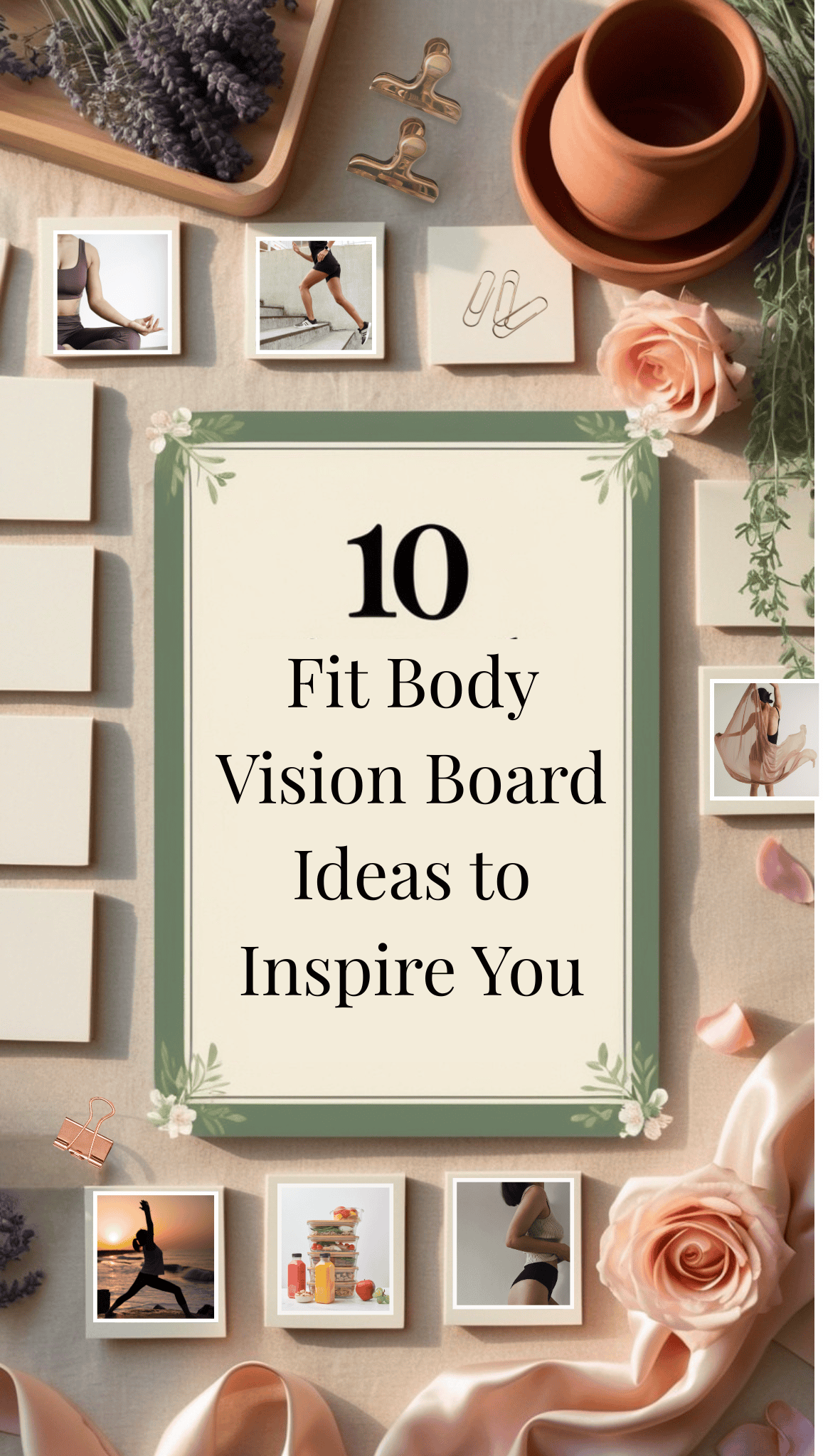
4. 10 Fit Body Vision Board Ideas to Inspire You
Not sure what style fits you? Here are 10 approaches—mix and match what resonates.
Idea 1: The Goal-Specific Board
Best for: People who love structure and checking things off
- Organize by specific goals (strength, endurance, flexibility)
- Include target numbers and milestone dates
- Add images representing each goal achieved
- Leave space to mark progress
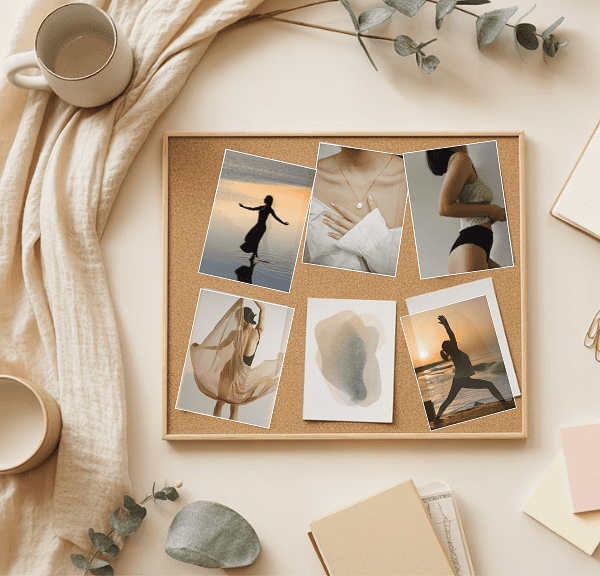
Idea 2: The “How I Want to Feel” Board
Best for: Anyone tired of appearance-focused motivation
- Focus entirely on feelings: energized, confident, peaceful, strong
- Choose images that evoke emotion, not just aesthetics
- Include words like “unstoppable,” “capable,” “alive”
- Skip any images focused on how bodies look
Idea 3: The Workout Inspiration Board
Best for: People who need reminders that fitness = fun
- Feature activities that genuinely excite YOU
- Include: dancing, hiking, swimming, yoga, boxing—whatever sparks joy
- Add images of workout spaces that inspire you
- Show movement, not just end results
Idea 4: The Healthy Lifestyle Board
Best for: Holistic thinkers who know fitness isn’t just gym time
- Include: nutritious meals, sleep, hydration, recovery
- Add stress-management and self-care visuals
- Feature work-life balance imagery
- Show the full picture of sustainable health
Idea 5: The Seasonal Goals Board
Best for: People whose motivation shifts throughout the year
- Create sections for each season OR rotate quarterly
- Summer: outdoor activities, adventure energy
- Winter: consistency, indoor workouts, maintenance
- Spring: renewal, fresh goals
- Fall: building strength, nourishing foods
Idea 6: The Non-Scale Victories Board
Best for: Anyone recovering from scale obsession
- Celebrate what the scale can’t measure
- Include: strength gains, energy levels, better sleep, mood improvements
- Leave space for YOUR progress photos
- Add images of people experiencing joy in movement
Idea 7: The Morning Routine Board
Best for: People who know how they start the day matters
- Visualize your ideal healthy morning
- Include: sunrise movement, stretching, nourishing breakfast
- Add peaceful, energizing imagery
- Place in your bedroom—first thing you see
Idea 8: The Body Positive Affirmation Board
Best for: Balancing ambition with self-acceptance
- Prioritize words over images
- Mix motivational quotes with self-compassion statements
- Include: “I am grateful for what my body can do”
- Balance pushing forward with honoring where you are
Idea 9: The Fitness Aesthetic Board
Best for: People motivated by curating a vibe
- Feature gorgeous workout outfits and gear
- Include dreamy workout spaces
- Add beautifully plated healthy meals
- Create an identity around fitness that feels like YOU
Idea 10: The Progress Tracker Board
Best for: People who need visual evidence of change
- Leave space for monthly progress photos
- Create sections for measurements and check-ins
- Include areas to write victories and breakthroughs
- Add a timeline showing start point to goal
5. Essential Elements Every Vision Board Needs
Don’t skip these—they’re what make vision boards actually work:
- [x] Clear images tied to YOUR specific goals (not generic fitspo)
- [x] Personal touches — a photo of yourself, handwritten notes, your “why”
- [x] Motivational quotes that feel personal, not cliché
- [x] Accountability markers — milestone dates, progress spaces, commitment statements
- [x] Process images — workouts, meals, routines (not just end results)
- [x] Balance — aspirational imagery + achievable action reminders
Pro Tip: For every image, ask: “Can I explain exactly why this is here?” If not, remove it.
6. How to Align Your Board With Your ACTUAL Goals
Most people create boards that look nothing like their real goals.
They pin marathon runners when they want more energy. They save bikini models when they want to build strength.
This disconnect kills motivation.
Before adding anything, get clear:
- What does fitness mean to ME? (Not Instagram. Not society. ME.)
- What do I want to feel/do/experience in my fit body?
- What specific outcomes am I actually working toward?
Alignment check for every image:
- Does this directly connect to my stated goals?
- Does this inspire action or just admiration?
- Would I be excited to become what this represents?
Pro Tip: Write a short intention statement next to key images. “This represents my goal to have energy for evening walks with my kids.”
7. Where to Place Your Board for Maximum Impact
A vision board you never see is useless. Location is everything.
Best physical placements:
- Bathroom mirror (see it while getting ready)
- Bedroom wall facing your bed (first/last thing you see)
- Closet door interior (daily outfit decisions)
- Kitchen (near coffee maker or fridge)
Best digital placements:
- Phone lock screen (you check it 100x daily)
- Laptop wallpaper
- Tablet screensaver
Power move: Use BOTH. Physical at home + digital on your phone = constant reinforcement.
Pro Tip: Put your board where you’ll see it during vulnerable moments—early morning and late night.
8. Keep Your Vision Board Working Long-Term
Vision boards have an expiration date. Not because they stop working—but because YOU change.
A static board becomes invisible. A maintained board stays powerful.
Monthly 15-minute check-in:
- Which images still inspire me?
- What goals have I made progress on?
- What needs to be added or removed?
- What victories can I celebrate/mark?
Signs it’s time to refresh:
- You walk past it without really seeing it
- The images no longer create emotional response
- Your goals have evolved
- You’ve achieved what’s on there (congrats!)
Pro Tip: Take a phone photo of your board each month. You’ll love seeing how it (and you) have changed.
Final Thoughts
Here’s the truth: fit body vision boards work when you make them yours.
Not a copy of someone else’s Pinterest aesthetic. Not impossible standards. Not a pretty project that ends up hidden.
YOUR board. YOUR goals. YOUR daily life.
Maybe yours will be feelings-focused. Maybe it’ll be a detailed goal tracker. Maybe digital, maybe physical, maybe both.
There’s no wrong approach—only the one that speaks to you.
Start with whatever idea called to you most. You don’t need perfect images or perfect supplies.
You need:
- Honesty about what you actually want
- Willingness to choose inspiration over comparison
- Commitment to putting it where you can’t ignore it
Your future fit self is waiting. Let your vision board be the daily conversation that gets you there. ✨
This post may contain affiliate links. I only recommend products and services I genuinely believe in. Additionally, some images on this website may have been created with the help of AI to convey the feeling and aesthetic I wish to share with my readers.
Frequently Asked Questions
How often should I look at my fitness vision board?
At least twice daily—morning to set intention, night to reinforce. But the real power is passive exposure from strategic placement. When it’s somewhere you can’t miss, you engage naturally without extra effort.
Can I have multiple vision boards?
Yes! Many people create separate boards for workouts, nutrition, and overall wellness. Just make sure each one gets regular visibility—better to have one board you see daily than five you ignore.
What if I’m not seeing results?
Vision boards support action—they don’t replace it. Ask yourself: Am I actually looking at it daily? Do these images inspire me or trigger comparison? Have I connected my board to specific actions? Often a placement or imagery tweak fixes the disconnect.
When should I update my board?
When you start walking past without really seeing it, or images no longer create emotional response. Also update when you’ve achieved goals (celebrate!) or priorities have shifted. Monthly check-ins help.
Should I focus on how I want to look or feel?
Feeling-focused tends to be more sustainable. Appearance imagery can backfire into comparison. The healthiest approach blends both—some aspirational images plus plenty representing energy, strength, confidence, and joy.
Pin this for later and tag me when you create your vision board! I’d love to see what you make. 📌
About The Author
Jahlila Bastian is a National Board-Certified Health & Wellness Coach (NBC-HWC), Certified Holistic Nutrition Coach (HNC), and creator of The Tri-Sync Method™. She helps women optimize their health, improve energy, lose weight in a sustainable way, and rebuild self-confidence while creating greater balance in body, mind, and life. Her whole-self approach blends evidence-based nutrition with personalized coaching, guiding women in building a holistic wellness lifestyle system designed for long-term success.
If you’re ready to improve your energy and health, feel confident in your body, strengthen your overall well-being, and create lasting results… Book your free Discovery Consultation here.
Leave a Reply