

Table of Contents
There’s a particular kind of exhale that happens when you walk into a room that feels right — where your shoulders drop, your breath slows, and something in you quietly says, yes, this is it. Most of us have experienced that feeling somewhere — a friend’s living room, a cozy café, a hotel that just got it — and spent years wondering why our own homes don’t quite do the same thing. The truth is, it’s rarely about budget or square footage. It’s about intention.
I spent a long time decorating around the edges of my home without ever really tending to it. I’d buy a new candle or rearrange the bookshelf, and nothing would fundamentally shift. It wasn’t until I started making small, deliberate choices — one at a time — that our home began to feel like somewhere I actually wanted to be. These seven shifts are the ones that made the difference for me. They’re gentle. They’re accessible. And they work.
This post may contain affiliate links. I only recommend products and services I genuinely believe in. Additionally, some images on this website may have been created with the help of AI to convey the feeling and aesthetic I wish to share with my readers.
What You Might Need
Before we dive into these restorative changes, here’s a quick look at what you’ll want to have on hand — or keep in mind — as we work through each section:
- A willingness to declutter — no budget needed, just 30–60 minutes of honest editing
- A couple of warm-toned lightbulbs or a simple lamp ($10–$30)
- A color palette you love — pull from Pinterest, your wardrobe, or nature for inspiration
- One or two easy plants or a bundle of dried botanicals ($5–$20)
- A cozy corner or chair you can claim as your slow-down spot
- A candle, diffuser, or fresh flowers to layer scent ($8–$25)
- An open mind — perfection is not the goal here, and it never has to be
This post may contain affiliate links. I only recommend products and services I genuinely believe in. Additionally, some images on this website may have been created with the help of AI to convey the feeling and aesthetic I wish to share with my readers.
1. Clear the Visual Noise First
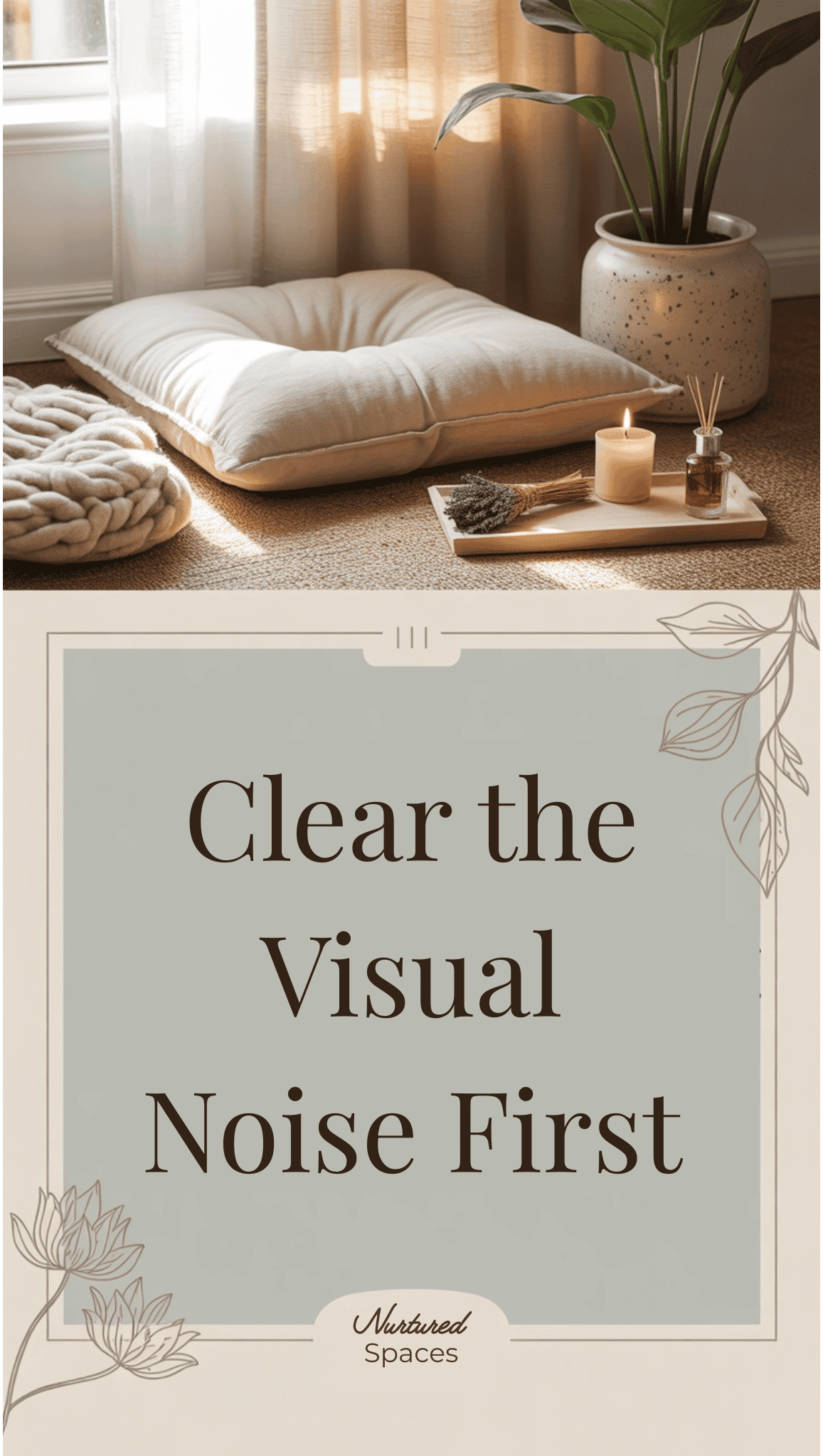
Take a slow look around your space right now. Count how many things your eye has to travel across before it finds somewhere to rest. If the answer is a lot — that’s your starting point. Visual clutter isn’t just a tidiness issue; it’s a sensory one. Our brains register every object in our line of sight as something that might need attention, and over time, that subtle demand adds up.
I used to think I was simply someone who lived messily. It took me a while to realize the clutter wasn’t a personality trait — it was a habit I’d never examined. The day I cleared my kitchen counter completely and just left it clear, something in my nervous system unclenched. I didn’t add anything back for a week. The space breathed, and so did I.
Why Visual Calm is the Foundation of Everything Else
Research from Princeton University found that cluttered environments actively compete for our attention, reducing our ability to focus and increasing background stress — even when we’re at rest. Every visible object sends a subtle signal that something needs to be done, decided, or dealt with. Over time, that signal becomes white noise — the kind that you stop noticing until it’s gone, and the silence feels profound.
The One-Surface-at-a-Time Method
Rather than attempting a full declutter in a single weekend (which leads to burnout and piles of things on the floor), try the one surface rule: choose a single flat surface each day and clear it completely. Keep only what’s beautiful, useful, or meaningful. Everything else finds a proper home — or leaves. Within a week, most spaces feel noticeably lighter, and you’ll have built the momentum to keep going.
What to Keep Visible — and What to Store
A good guiding principle: if it doesn’t serve you visually or practically, it doesn’t need to live on display. Duplicates, paperwork, and rarely-used items belong behind closed doors. Surfaces are for intentional vignettes — a single plant, a candle, one meaningful object. The fewer things competing for your eye’s attention, the more spaciously the room breathes.
How to Reclaim Your Space Starting Today
- Choose one surface to clear completely in the next ten minutes
- Remove everything — start from zero, not from editing what’s already there
- Ask: is this beautiful, useful, or meaningful? If not, it goes
- Find a home for everything that stays — no homeless objects on display
- Notice how the cleared surface makes you feel — that feeling is your compass for the rest of your home
Once the visual noise quiets, everything else becomes easier. A calm surface is the canvas — and now you’re ready to work with it.

2. Add Warmth and Depth With Layered Lighting
Most homes rely on a single overhead light, and that one choice is quietly making every room feel flatter and harsher than it needs to. Lighting is the most underestimated element in a home — not because people don’t care about it, but because it’s invisible until you change it. The moment you do, you’ll wonder how you ever lived any other way.
I swapped one overhead bulb in our living room for a warm floor lamp, and the room immediately felt like somewhere I wanted to spend an evening rather than somewhere I’d sit scrolling out of obligation. Same furniture. Same art on the walls. Completely different feeling. The science behind this is straightforward: warm light mimics firelight, which our nervous systems have spent thousands of years associating with safety and rest.
The Three Layers Every Room Deserves
Ambient lighting sets the general tone — overhead fixtures, pendants, or ceiling lights. Task lighting serves a specific function — reading lamps, under-cabinet strips, desk lights. Accent lighting adds warmth and depth — table lamps, candles, string lights tucked behind furniture. Most homes only have ambient lighting, which is why they feel flat. Layering all three creates rooms that feel rich, alive, and genuinely relaxing.
Why Bulb Temperature Changes Everything
Bulb temperature is measured in Kelvins. 2700K–3000K is the warm sweet spot for a sanctuary-like glow — think candlelight or late afternoon sun. Anything above 4000K reads as cool and clinical. Swapping out a few cool-toned bulbs for warm ones is a $5–$10 fix that makes an immediate, noticeable difference in how your home feels. It’s one of the highest-return changes you can make.
Simple Swaps That Make a Big Difference
You don’t need to rewire anything. Add a table lamp or floor lamp to any room that currently relies only on overhead light. Place a candle or LED candle on your coffee table or nightstand for evening ambiance. Install a dimmer switch (under $20, a 15-minute project) in your most-used room. Each layer you add moves your home closer to that enveloping, unhurried glow.
How to Layer Your Lighting Room by Room
- Swap all bulbs to warm white (2700K–3000K) as your first step
- Add at least one lamp to any room with only overhead lighting
- Place a candle or lantern on a coffee table or side table for evening use
- Use a dimmer switch to shift the mood instantly in living areas
- In bedrooms, avoid overhead lighting entirely in the evenings — lamps only
3. Choose a Calming, Cohesive Color Story
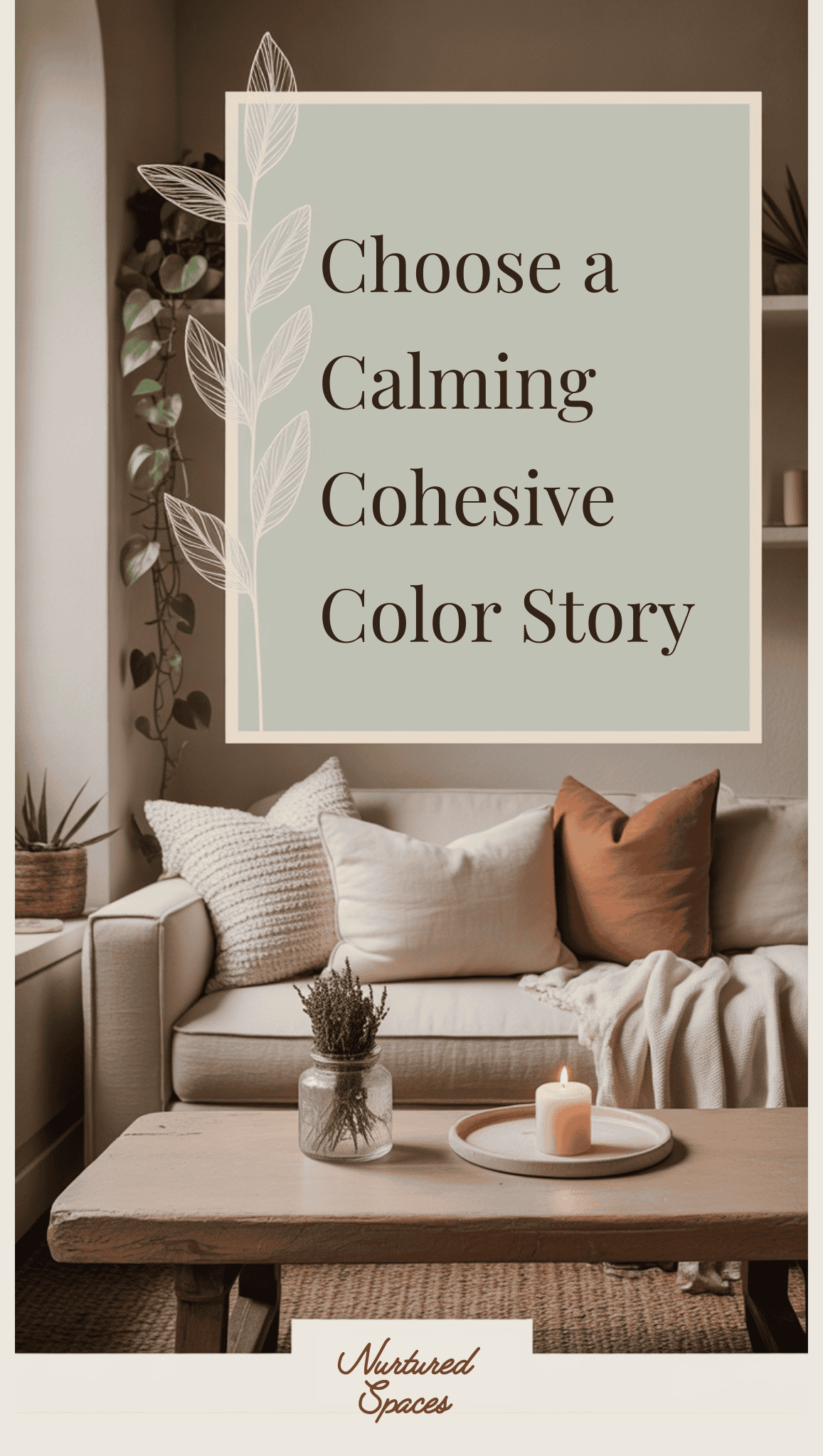
There’s a quiet kind of tension that builds in a room where the colors don’t quite speak to each other — where a bright turquoise pillow sits next to a burgundy rug next to a white wall, and nothing is wrong exactly, but nothing is restful either. A cohesive color story isn’t about matching everything perfectly. It’s about giving your eye a through-line — somewhere to travel and settle.
You don’t need to repaint your walls to make this shift. A color story lives primarily in your textiles, accessories, and the tones you choose to repeat throughout a space. I chose a base of warm creams and taupes and added one grounding earthy sage green in three different places around the room — a plant pot, a throw pillow, a small piece of art. Suddenly the room felt like it had been designed, not just accumulated.
How Color Psychology Shapes the Way You Feel at Home
Color communicates directly with our nervous system before our conscious mind gets involved. Warm neutrals — cream, linen, warm white — signal safety and ease. Earthy greens and terracottas evoke nature and groundedness. Bright whites and cool grays can feel energizing, but also stark. For a space that restores you, you want a palette that slows your nervous system down rather than stimulating it — the visual equivalent of a deep breath.
Building Your Neutral Base and One Accent
The simplest and most effective formula: 80% neutral base, 20% one grounding accent color. Your neutral base lives in your walls, large furniture pieces, and main textiles. Your accent color appears in pillows, a throw, a plant pot, a piece of art. When that accent color repeats in three or more places throughout a room, the space begins to feel intentional and cohesive — even if nothing else has changed.
Using Textiles and Decor to Shift Your Palette Without Repainting
Textiles do the heaviest lifting for the least investment. A new throw, a swapped pillow cover, a different rug can shift the entire color story of a room in an afternoon. Add a plant in a pot that echoes your chosen palette. Remove anything that clashes or competes visually. Repetition creates cohesion — and cohesion is what makes a space feel calm, curated, and quietly, unmistakably yours.
How to Build Your Color Story This Weekend
- Pick one accent color you feel genuinely drawn to — earthy green, warm terracotta, dusty sage
- Find three places in the room to echo it: a pillow, a plant pot, a small decorative object
- Remove anything that visually clashes with your chosen palette, even temporarily
- Keep larger pieces (sofa, rug) anchored in warm neutrals as your base
- Step back and notice: does the room feel like it belongs to itself now?
4. Incorporate Nature Into Every Room
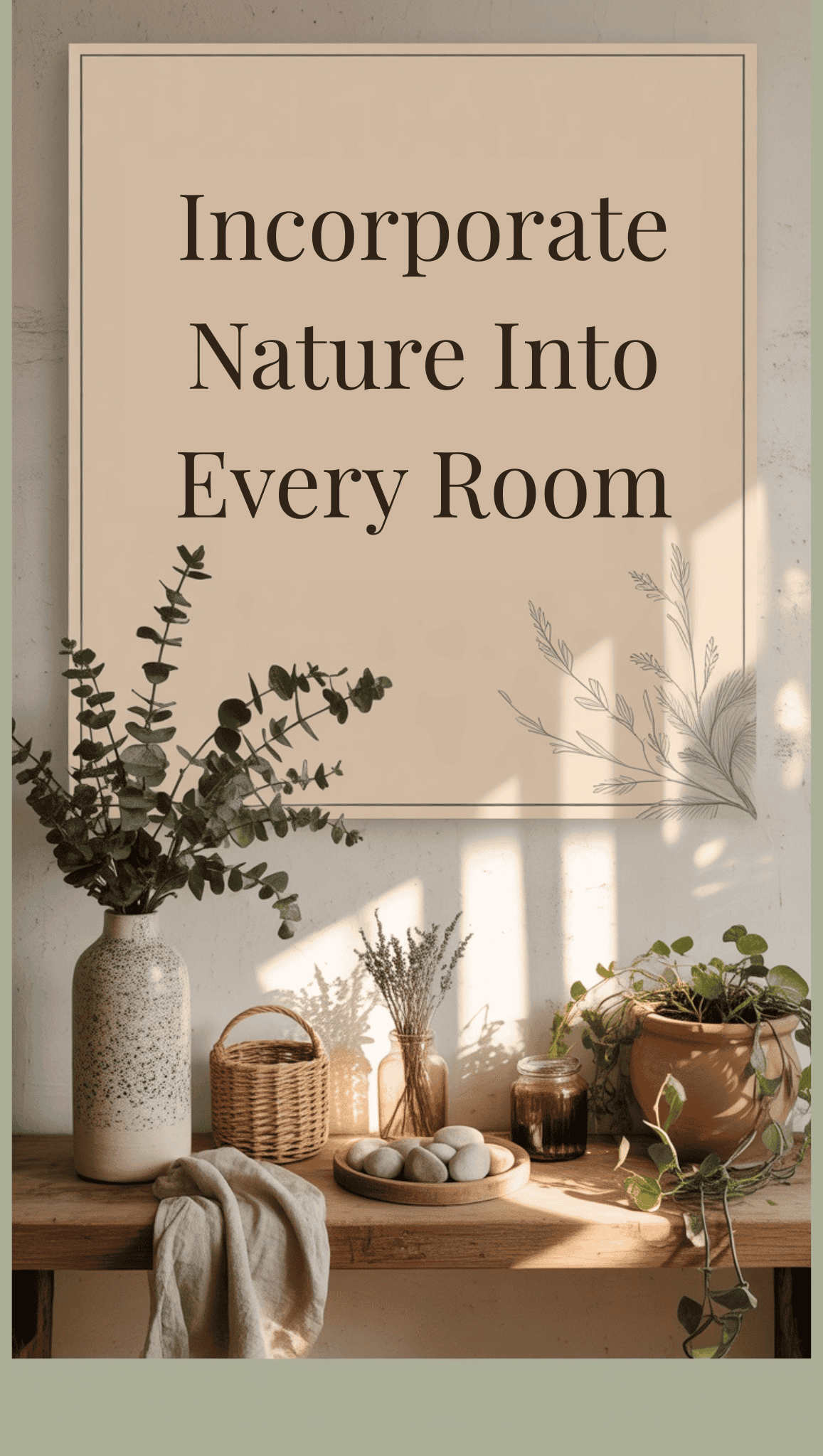
There’s a reason we feel better after a walk outside, or when sunlight comes through a window at the right angle, or when we sit near a plant without even consciously noticing it. We evolved in nature — our nervous systems still carry that memory. When our homes have none of it — no plants, no natural textures, no organic shapes — something feels subtly, persistently off.
Biophilic design is simply the practice of responding to that need. And it doesn’t require a conservatory or a garden flat. I used to say I didn’t have a green thumb, until I realized I’d been choosing the wrong plants entirely. A pothos. A snake plant. A bundle of dried eucalyptus in a simple vase. These small additions shifted the entire energy of our home in a way I genuinely didn’t expect.
The Science Behind Biophilic Design
Research published in the Journal of Environmental Psychology shows that exposure to natural elements — even images of nature — lowers cortisol, reduces blood pressure, and improves mood within minutes. Living plants go further still: they improve air quality and introduce a subtle sense of life into a space — something that moves, grows, and exists independently of you. That presence matters more than we give it credit for.
Easy Ways to Bring Nature Into Every Room
You don’t need a greenhouse or a perfect south-facing window. Start with: a single plant in a room that has none. Dried botanicals in a simple vase — no watering required, full visual impact. Natural materials like a wooden tray, a rattan basket, a linen cushion cover. Organic shapes in your decor — curves instead of sharp lines. Each element you add creates a cumulative sense of being connected to something larger than four walls.
Low-Maintenance Plants for People Who Think They Can’t
The best starting points: pothos (thrives on neglect and low light), snake plant (almost impossible to kill), ZZ plant (loves low light and infrequent watering), and dried botanicals (zero maintenance, lasting visual impact). Style them in grounding containers — terracotta, matte ceramic, woven baskets — for a look that feels organic rather than like an afterthought.
How to Add Nature to Your Home This Week
- Add one plant or botanical to a room that currently has none
- Swap a synthetic throw or pillow for a linen or cotton version
- Introduce a wooden or rattan element to any surface
- Open your blinds — natural light is nature too, and it costs nothing
- Add a small stone, shell, or piece of driftwood to a vignette for quiet organic texture
5. Create One Intentional Slow-Down Spot
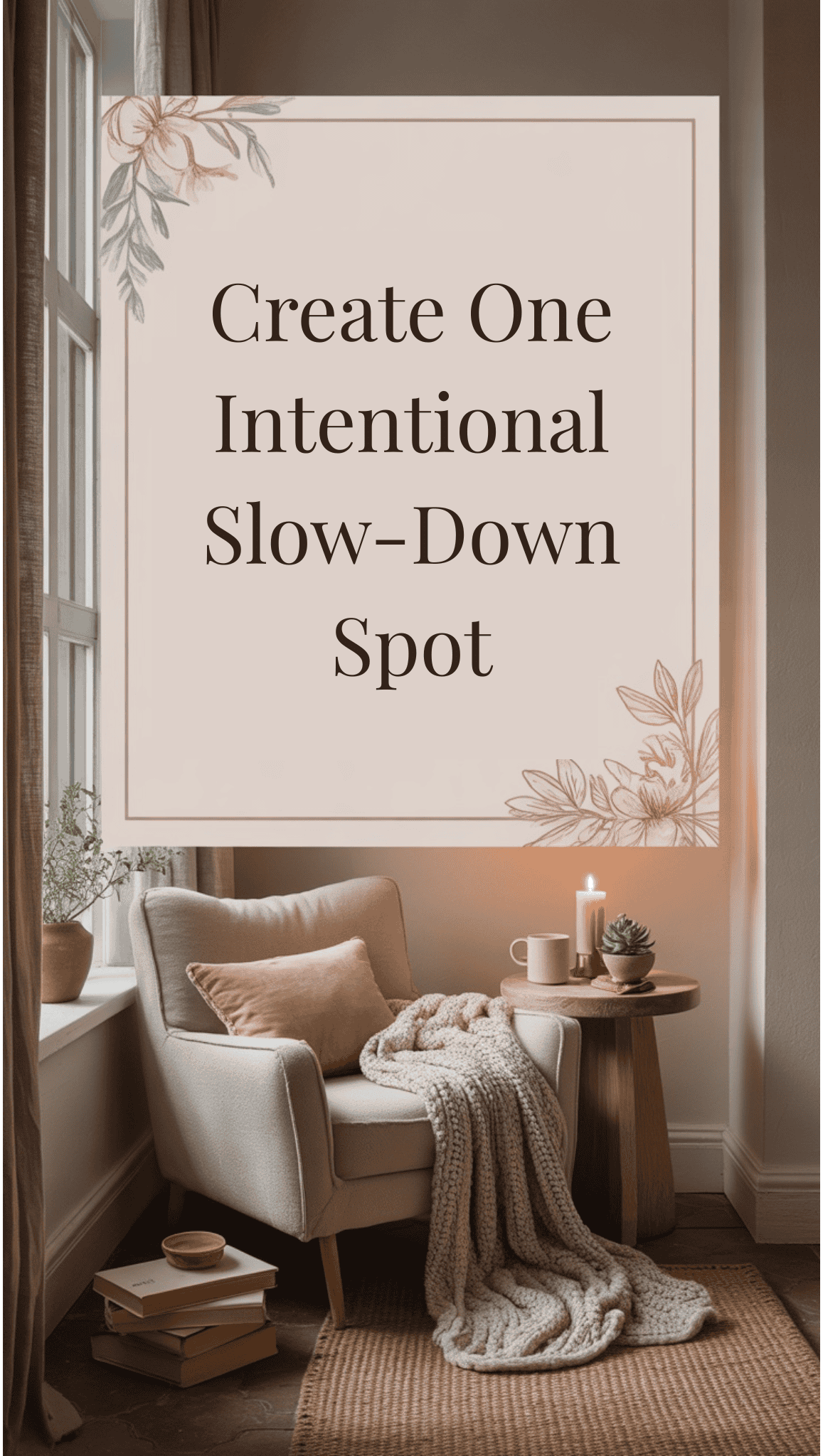
Here’s a question worth sitting with: where in your home do you go to do nothing? Not to scroll. Not to watch something or catch up on email. Just to be still, to think, to exist without an agenda. If your answer is nowhere — that is one of the most important things to change. Every restorative home needs a place of stillness, and creating one changes how the whole space feels.
Mine is a chair by the window with a small side table, a lamp, and a stack of books I’m working through slowly. It took me less than an hour to create and cost nothing — the chair was already there. I simply claimed it with intention, removed everything that didn’t belong, and started using it deliberately. Now, walking past it is its own small reminder that this home is a place where rest is allowed. That reminder carries more weight than any renovation.
Why Your Nervous System Needs a Dedicated Resting Place
When a home has no designated space for stillness, the brain never fully disengages. There’s always somewhere to be, something to attend to. A specific slow-down spot acts as a physical anchor for the nervous system — a signal that says: this is where we recover. Over time, simply being near it begins to trigger a relaxation response, a psychological phenomenon known as environmental cueing. Your body learns to soften there before you’ve even sat down.
Slow-Down Spot Ideas for Every Home and Space
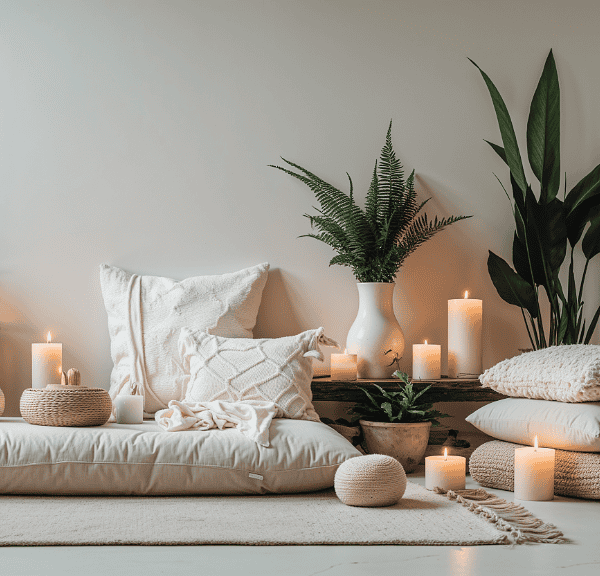
You don’t need a dedicated room or even a lot of square footage. A reading nook is just a chair with good light and a small side table. A meditation corner is a floor cushion, a candle, and a small plant. A morning spot is a window-facing chair and your favorite mug. Even a rearranged corner of a bedroom works beautifully. The defining quality isn’t size — it’s that the spot exists just for being, not for doing.
How to Style Your Spot for Maximum Comfort
Layer it with texture, warmth, and one meaningful object. A soft throw. A warm lamp. A candle or small plant. One book, one journal, or one thing that makes you genuinely smile when you see it. Keep it uncluttered — this is not a surface for putting things down. The simpler the slow-down spot, the more spacious and restorative it feels every time you return to it.
How to Create Your Slow-Down Spot Today
- Choose one corner, chair, or window area to claim as yours
- Clear it of anything task-related — no laptops, no paperwork, no to-do lists
- Add one soft textile — a throw or cushion — for immediate physical comfort
- Place a warm light source nearby: a lamp, a candle, or string lights
- Add one meaningful object: a plant, a crystal, a book, something that’s yours
- Sit in it. Do nothing for five minutes. Notice what shifts.
6. Use Scent as an Invisible Layer of Your Space
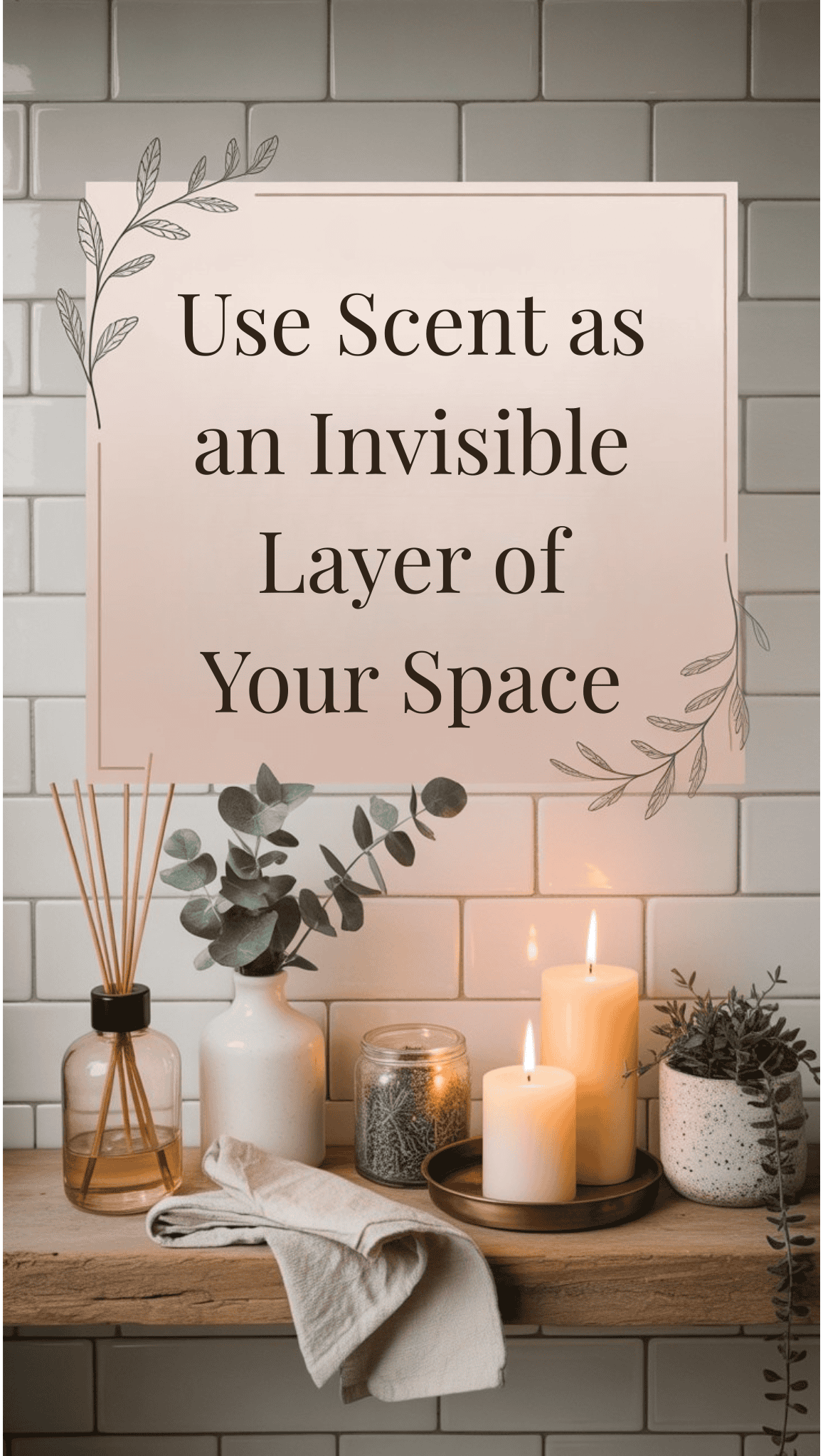
Of all our senses, smell is the one most directly wired to emotion and memory. It bypasses the analytical mind and goes straight to the parts of the brain that govern how we feel — which means the right scent in a room doesn’t just smell pleasant. It literally changes your emotional state within seconds. And yet scent is the element most people forget entirely when thinking about home design.
I started diffusing cedarwood and orange in our living room a few years ago, and guests would walk in and comment on how calm it felt in there — before they’d even sat down or noticed anything visually. They were responding to something they couldn’t name. That invisible quality is exactly what makes scent so powerful as a design layer. It works below the level of conscious awareness, and it works quickly.
How Scent Reaches the Brain and Why It Matters
Unlike other sensory inputs, scent bypasses the thalamus and travels directly to the amygdala and hippocampus — the emotional and memory centers of the brain. Lavender has been shown in multiple studies to reduce anxiety and improve sleep quality. Cedarwood and sandalwood promote feelings of groundedness. Citrus scents can lift mood within minutes. Used intentionally, scent becomes aromatherapy woven seamlessly into the fabric of your home.
Candles, Diffusers, and Fresh Botanicals — Finding Your Mix
Each has its own strengths. Candles add warmth and ambient glow alongside scent — ideal for evenings. Diffusers offer continuous, adjustable scent without an open flame, making them perfect for daytime use. Fresh botanicals — eucalyptus in the shower, lavender by the bed, herbs in the kitchen — provide a subtle, living scent that feels deeply natural. Layering all three creates a home that smells thoughtful in every room, at every time of day.
How to Match Scent to the Purpose of Each Room
Bedroom: lavender or chamomile for ease and sleep. Living room: cedarwood, amber, or warm vanilla for calm and grounding. Bathroom: eucalyptus or mint for a spa-like freshness. Kitchen: citrus or fresh herbs to neutralize cooking odors and feel energized. Rotating your scents seasonally — warmer, spiced notes in autumn and winter, fresh and green in spring and summer — keeps your home feeling alive and intentional throughout the year.
How to Add Scent as a Design Layer This Week
- Choose one signature scent for your most-used room and commit to it for a month
- Hang a eucalyptus bundle in your shower — it releases scent with steam and lasts for weeks
- Place a candle or diffuser in your slow-down spot from the previous section
- Try a linen spray on cushions and bedding for a gentle, effortless ambient scent
- Begin rotating scents seasonally to keep your home feeling fresh year-round
7. Let Go of Perfect — Embrace Lived-In Beauty
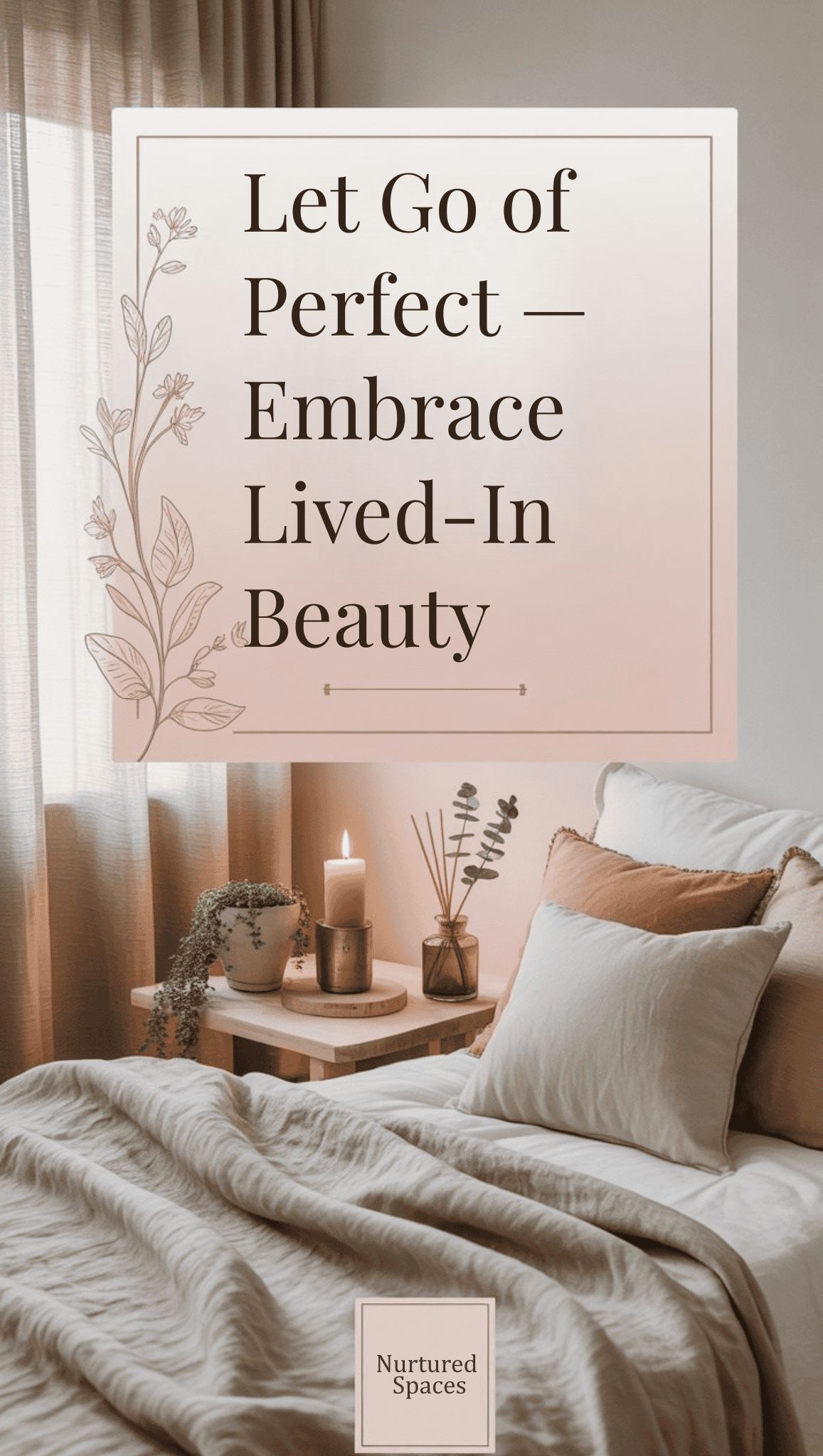
The most important shift in this entire list isn’t a purchase or a rearrangement. It’s a change in how you see your home — and what you decide it’s for. So many of us have been quietly measuring our spaces against an imaginary standard: the magazine page, the Pinterest board, the beautifully styled home that always seems to be almost finished. And that comparison, more than any design choice, is what keeps us from settling into the homes we already have.
The Japanese concept of wabi-sabi — finding beauty in imperfection, impermanence, and incompleteness — offers something genuinely healing here. It doesn’t mean lowering your standards. It means releasing the idea that beauty requires perfection. Your worn throw, the stack of books that never quite lines up, the plant that grows a little sideways toward the light — these are not flaws. They are evidence of a life being lived. And a life being lived is the most beautiful thing a home can hold.
The Wabi-Sabi Philosophy and What It Means for Your Space
Wabi-sabi is a radical act of acceptance in a culture that sells us the next thing constantly. It means choosing the chipped mug you love over the perfect one that means nothing. It means letting a room be 70% done and deciding that’s exactly enough. Research in positive psychology consistently shows that acceptance-based approaches to our environment reduce anxiety and increase life satisfaction far more effectively than perfectionism ever does.
How to Style Imperfection Intentionally
There’s genuine artistry in lived-in beauty. Worn textures — weathered wood, aged linen, patinated brass — carry history and warmth. Mismatched elements that share a common color tone feel collected rather than chaotic. Personal objects — handmade pieces, travel finds, a photo that makes you laugh — give a space the kind of soul that no showroom can replicate. Style your home for yourself first, not for the imaginary guest who’s silently critiquing every corner.
Giving Yourself Permission to Make It Genuinely Yours
Your home doesn’t need to look like a magazine. It needs to feel like you. That means including the things that make you genuinely happy, even when they’re not trending. A gallery wall of your children’s drawings. A shelf of well-loved paperbacks with broken spines. A candle burned all the way down because it was perfect. Permission granted. The homes that feel most like sanctuaries are always, without exception, the ones that are unmistakably someone’s.
How to Embrace Lived-In Beauty Starting Now
- Identify one imperfect thing in your home that you actually love — and stop apologizing for it
- Add one personal object to a styled shelf or surface — something that’s yours, not Pinterest’s
- Let one room be done enough — resist the urge to keep adjusting it
- Choose worn, natural textures over anything that feels too precious to actually use
- Remind yourself regularly: a beautiful home is one you actually live in
Final Thoughts
Here’s the thing about creating a home that restores you: it has very little to do with money, square footage, or design talent. It has everything to do with the small, repeated choice to make your home a place that holds you — that supports your nervous system, reflects your personality, and gives you somewhere to exhale at the end of the day.
Maybe you start today by clearing one surface. Maybe you order a warm bulb or pull out a candle you haven’t lit in months. Maybe you finally claim that chair by the window as yours. Start wherever calls to you — there is no wrong entry point into a more intentional home.
These seven shifts aren’t a checklist to complete and set aside. They’re a practice — one you return to as your life changes, your tastes evolve, and your understanding of what home means deepens. Some days your sanctuary will feel exactly right. Some days it’ll feel chaotic and overwhelming. Both are allowed.
What matters is that you keep choosing to tend to your space the way you would tend to yourself — with patience, with care, and with the quiet knowledge that you deserve somewhere that genuinely feels like yours.
This post may contain affiliate links. I only recommend products and services I genuinely believe in. Additionally, some images on this website may have been created with the help of AI to convey the feeling and aesthetic I wish to share with my readers.
Frequently Asked Questions
How long does it take to make your home feel more restorative?
You can feel a genuine difference within a single afternoon by focusing on lighting and one cleared surface. Deeper shifts — a cohesive color story, a slow-down spot, layering natural elements — typically unfold over 2–4 weeks of small, consistent changes. The key is consistency over intensity. Little and often works far better than a single overwhelming overhaul.
Do I need to spend a lot of money to create a sanctuary at home?
Absolutely not. Most of these changes cost under $30 — or nothing at all. Decluttering, rearranging furniture, swapping lightbulbs, claiming a slow-down spot — these are free. A plant, a candle, and a warm throw cover the rest. A restorative home is built with intention, not investment. Your budget is not the barrier here — your willingness to begin is.
What if I rent and can’t make permanent changes?
Renters have far more power than they realize. Lighting, textiles, scent, plants, and decluttering require zero landlord permission and make an enormous difference. Use removable hooks for art, layer rugs over existing flooring, and focus on portable sanctuary-makers — lamps, candles, throws, botanicals. You can completely transform how a rented space feels without touching a single wall.
I’m overwhelmed — where do I actually start?
Start with one surface and one lightbulb. Clear the closest flat surface to you right now. Then swap the nearest overhead bulb for a warm-toned one. These two things take under twenty minutes and will give you an immediate, tangible sense that something has shifted. Use that feeling as your momentum. You don’t need a full plan — you need a start.
Can these ideas work for a small space or a busy household?
Yes — and small spaces often benefit more from these principles, because every element carries more visual weight. Busy households need a restorative home even more urgently. You’re not creating a showroom — you’re creating a space that can hold real life with grace. Start small, stay consistent, and give everyone in your household a slow-down spot of their own. Peace scales.
About The Author
Jahlila Bastian is a National Board-Certified Health & Wellness Coach (NBC-HWC), Certified Holistic Nutrition Coach (HNC), certified Weight Loss Specialist (WLS), certified Gut Health Nutrition Specialist (GHNS), and creator of The Tri-Sync Method™. She helps women optimize their health, improve energy, lose weight in a sustainable way, and rebuild self-confidence while creating greater balance in body, mind, and life. Her whole-self approach blends evidence-based nutrition with personalized coaching, guiding women in building a holistic wellness lifestyle system designed for long-term success.
If you’re ready to improve your energy and health, feel confident in your body, strengthen your overall well-being, and create lasting results… Book your free Discovery Consultation here.

Leave a Reply